
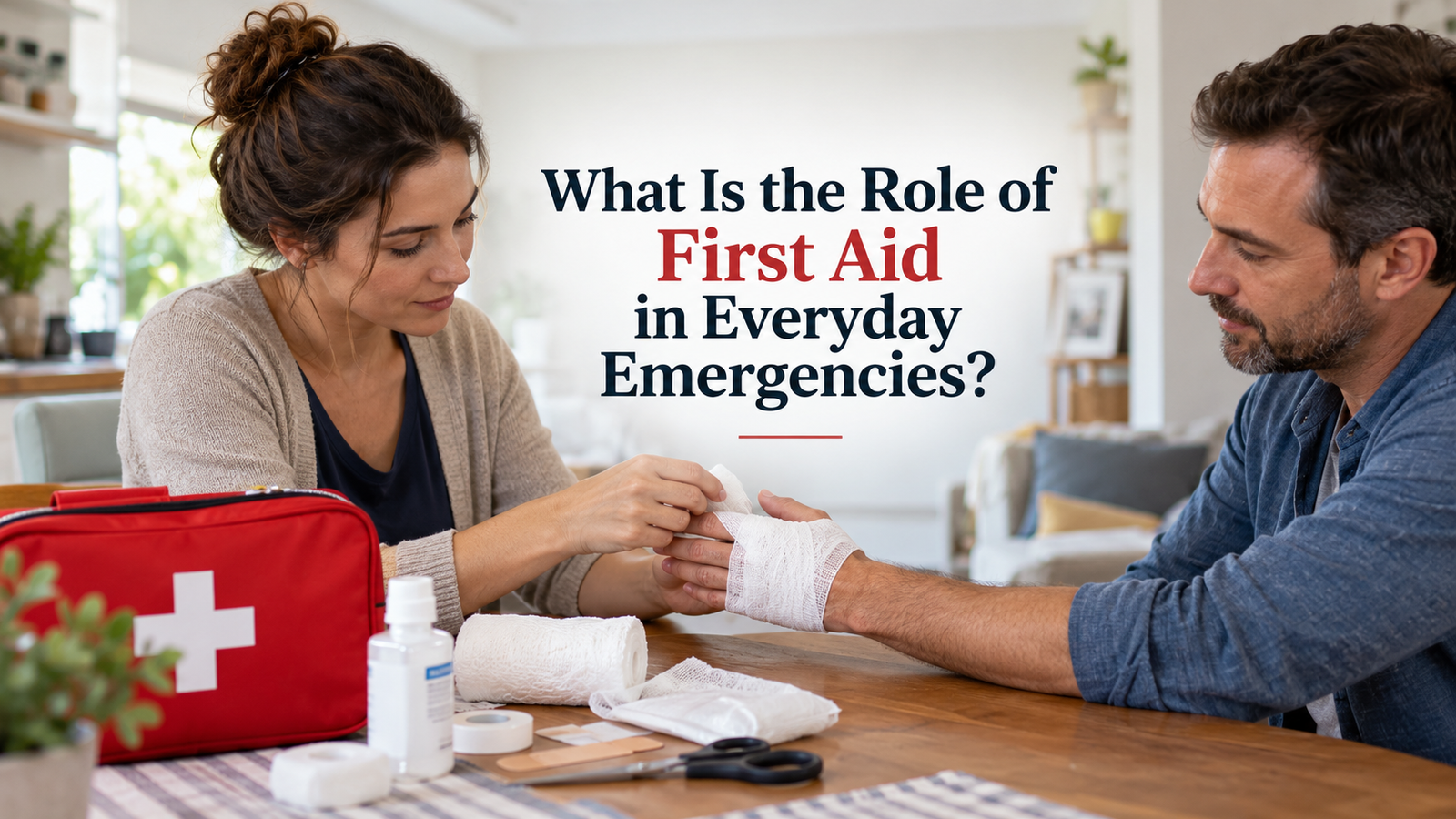
Emergencies can happen at any time, whether we are at home, working in an office, traveling on the road, or spending time with family. A person may suddenly fall, suffer a burn, experience difficulty breathing, or get injured while performing ordinary activities. During such situations, knowing how to respond can make an important difference. This is where first aid becomes valuable.
First aid refers to the immediate assistance provided to someone who is injured or suddenly becomes ill before professional medical care is available. It does not replace medical treatment, but it helps protect the person, prevent further harm, and support recovery.
Understanding the role of first aid in everyday emergencies is an important part of health education. Even basic knowledge can help individuals make safer decisions during unexpected situations.
First aid is not limited to healthcare professionals. Parents, teachers, students, office workers, and other community members can learn essential first aid skills. With proper training and awareness, ordinary people can become better prepared to respond to common emergencies.
What Is First Aid?
First aid is the initial care given to an injured or sick person before qualified medical professionals take responsibility for treatment.
The main purpose of first aid is to preserve life, prevent an injury or illness from becoming worse, and promote recovery whenever possible.
For example, when someone suffers a minor cut, cleaning and covering the wound can reduce the risk of contamination. Similarly, applying appropriate pressure to a bleeding wound can help control blood loss while medical assistance is arranged.
First aid may involve simple actions such as helping someone sit comfortably, protecting an injured body part, cooling a burn, or contacting emergency services.
However, providing first aid also requires understanding personal limitations. Serious injuries and medical conditions require professional assessment. A person offering first aid should avoid attempting procedures beyond their knowledge or training.
Why Is First Aid Important in Everyday Life?
The importance of first aid becomes clear when we consider how quickly ordinary situations can develop into emergencies.
A child may accidentally touch a hot cooking surface. An elderly person may slip in the bathroom. A worker may injure a hand while using equipment. Someone eating at a restaurant may suddenly begin choking.
These situations require immediate attention, but professional help may not always arrive instantly.
First aid helps people take appropriate action during this important period.
One major benefit is that it can prevent further injury. For example, keeping a person with a suspected fracture from moving unnecessarily may reduce additional harm.
Another benefit is that first aid encourages a calm and organized response. Instead of becoming confused or frightened, a trained individual can assess the situation and decide what action is needed.
Most importantly, appropriate first aid can sometimes save lives, particularly during severe bleeding, choking, or cardiac arrest.
How Does First Aid Help Save Lives?
Some medical emergencies become dangerous within minutes. During these situations, immediate action can significantly influence the outcome.
Cardiac arrest is one example. It occurs when the heart suddenly stops pumping blood effectively. A person experiencing cardiac arrest typically becomes unresponsive and stops breathing normally.
Cardiopulmonary resuscitation, commonly called CPR, helps maintain blood circulation while emergency medical assistance is on the way.
For an unresponsive adult who is not breathing normally, a responder should contact emergency services, begin CPR, and use an automated external defibrillator if one is available. People without rescue breathing training can perform continuous chest compressions following emergency dispatcher instructions.
Similarly, severe bleeding can become life threatening if blood loss is not controlled. Applying firm, direct pressure to the wound can help reduce bleeding until medical professionals arrive.
These examples demonstrate why learning basic first aid techniques is valuable for people of different ages and backgrounds.
The Role of First Aid in Preventing Further Injuries
Preventing additional harm is one of the most important objectives of first aid.
An injured person may already be experiencing pain, weakness, or emotional distress. Incorrect handling can sometimes make the condition worse.
For example, moving someone after a serious road accident without considering possible spinal injuries may cause further damage.
A first aid responder should therefore assess the surroundings and avoid unnecessary movement, especially when a head, neck, or back injury is suspected.
The environment also needs attention. Broken glass, electrical hazards, moving vehicles, and dangerous machinery may threaten both the injured person and the responder.
Ensuring personal safety is always the first priority.
A useful general approach is to check the scene, call for emergency assistance when necessary, and provide appropriate care within one’s training.
Common Everyday Emergencies That Require First Aid
First aid is useful in many situations that people encounter during daily life.
1. Minor Cuts and Wounds
Small cuts may occur while cooking, gardening, or handling sharp objects.
For minor wounds, washing the affected area with clean running water and covering it with a clean dressing can help protect against infection.
If bleeding occurs, gentle but firm pressure with clean gauze or cloth may help stop it.
Deep wounds, uncontrolled bleeding, or injuries involving serious contamination require professional medical attention.
2. Burns and Scalds
Burns commonly occur in kitchens, workplaces, and areas where hot liquids or electrical appliances are used.
For a minor thermal burn, cooling the affected area under cool running water for about 20 minutes is a recommended first aid measure.
Ice, butter, toothpaste, and household oils should not be applied because they may damage the skin or interfere with appropriate treatment.
Severe burns, chemical burns, electrical burns, and burns involving sensitive body areas require urgent medical evaluat
3. Sprains and Muscle Injuries
Sprains may occur during exercise, walking, or sports activities.
Initial care generally involves protecting the injured area, reducing unnecessary movement, and applying a cold pack wrapped in cloth for short periods.
Rest and appropriate support can help limit discomfort.
However, severe pain, visible deformity, or difficulty bearing weight may indicate a more serious injury requiring medical assessment.
4. Choking Emergencies
Choking happens when food or another object blocks the airway.
A person with mild choking may still be able to cough and breathe. Encouraging continued coughing can help clear the obstruction.
When someone cannot speak, breathe, or cough effectively, immediate emergency assistance is necessary.
For adults and children older than one year, trained responders can use back blows followed by abdominal thrusts when appropriate. The technique differs for infants and certain other individuals, making practical training especially important.
5. Fainting and Sudden Weakness
Fainting is a temporary loss of consciousness that may occur because of reduced blood flow to the brain.
If someone feels faint, helping them lie down safely can reduce the risk of falling.
If the person becomes unconscious, their breathing and responsiveness should be checked immediately.
An unresponsive person who is breathing normally may be placed in the recovery position when appropriate, unless a suspected spinal injury makes movement unsafe.
Someone who is not breathing normally requires immediate emergency assistance and CPR.
The Importance of First Aid at Home
Home is one of the most common places where minor accidents occur.
Cooking, cleaning, electrical appliances, stairs, and household tools can all create situations that require immediate care.
Children may experience falls, cuts, or burns while playing. Older adults may face injuries related to balance problems or reduced mobility.
Basic first aid knowledge allows family members to respond appropriately without unnecessary confusion.
Every household should consider keeping a first aid kit in an easily accessible location.
The kit should contain essential items such as sterile gauze, adhesive bandages, disposable gloves, antiseptic supplies, and basic wound dressings.
Family members should also know where the kit is stored and how to contact local emergency services.
Why Is First Aid Important in Schools?
Schools bring together large numbers of children who participate in physical activities, sports, and classroom learning.
Minor injuries such as cuts, bruises, and falls can happen during ordinary school activities.
Teachers and school staff with appropriate first aid training can provide immediate assistance while arranging further medical care when necessary.
First aid education can also help students develop awareness of personal safety.
For example, students can learn how to recognize dangerous situations, report injuries, and seek help from responsible adults.
Schools should maintain accessible first aid supplies and establish clear procedures for responding to emergencies.
Teaching age appropriate first aid concepts encourages responsibility and helps create a safer learning environment.
The Role of First Aid in Workplaces
Workplace injuries can occur in offices, factories, construction sites, shops, and agricultural settings.
The nature of emergencies often depends on the working environment.
Office employees may experience falls or sudden medical illness, while industrial workers may face risks involving machinery, chemicals, or electrical equipment.
First aid training helps employees recognize emergencies and respond according to established safety procedures.
Workplaces should provide suitable first aid equipment and ensure that trained personnel are available when needed.
Clear emergency plans and communication systems are equally important.
First aid should be considered part of a wider workplace safety program that includes hazard prevention, employee training, and emergency preparedness.
How Does First Aid Reduce Panic During Emergencies?
Fear and confusion are natural responses when someone becomes seriously injured.
People who do not know what to do may hesitate, panic, or take actions that unintentionally create additional risks.
First aid education helps individuals understand how to approach an emergency calmly.
A trained responder is more likely to check the surroundings, assess the person’s condition, and contact emergency services without unnecessary delay.
Calm communication can also reassure the injured person.
For example, explaining that medical assistance has been requested may help someone feel less frightened.
Although first aid training cannot remove every emotional response, it can improve confidence and decision making during stressful situations.
The Importance of First Aid Training
Reading about first aid provides useful knowledge, but practical training helps people develop essential skills.
Training programs often cover CPR, choking management, bleeding control, burn care, and responding to unconscious individuals.
Participants may practice techniques using training equipment and realistic emergency scenarios.
These activities help people understand not only what to do but also how to perform actions correctly.
Recognized organizations such as the Red Cross provide first aid education and training resources.
Because medical recommendations can change, reviewing skills periodically is important.
Regular practice improves familiarity with emergency procedures and helps individuals maintain confidence.
What Should a Basic First Aid Kit Contain?
A first aid kit is a practical resource that supports emergency preparedness.
The contents may vary depending on whether the kit is intended for home, school, travel, or workplace use.
Common supplies include:
- Sterile gauze pads for covering wounds.
- Adhesive bandages for minor cuts.
- Medical tape for securing dressings.
- Disposable gloves for personal protection.
- Antiseptic wipes for appropriate skin cleaning.
- Elastic bandages for supporting certain injuries.
- Scissors and tweezers for basic first aid tasks.
- A digital thermometer for checking body temperature.
- An emergency contact information card.
- A first aid instruction guide.
Supplies should be checked regularly and replaced when damaged, used, or expired.
A first aid kit is most useful when people understand how to use its contents safely.
Common First Aid Mistakes to Avoid
Although helping an injured person is important, incorrect first aid practices can create additional problems.
One common mistake is applying household substances to burns. These substances may irritate damaged skin and interfere with treatment.
Another mistake is moving someone unnecessarily after a serious accident.
Some people also attempt to remove deeply embedded objects from wounds, which may worsen bleeding.
Giving food or water to an unconscious person is particularly dangerous because the individual cannot swallow safely.
Delaying professional treatment during serious emergencies is another concern.
Recognizing these mistakes helps people understand why accurate first aid knowledge matters.
The safest approach is to follow recognized guidance, provide care within personal abilities, and request medical assistance when required.
How Does First Aid Support Community Health?
First aid contributes to community health by improving emergency awareness and encouraging responsible action.
When more people learn basic first aid skills, schools, neighborhoods, workplaces, and public spaces may become better prepared to handle unexpected incidents.
Community training programs can help people recognize medical warning signs and understand when immediate professional assistance is necessary.
First aid education also encourages cooperation.
During an emergency, one person may contact medical services while another provides appropriate assistance.
This organized response can help reduce confusion and support the injured person until healthcare professionals arrive.
First aid awareness is therefore a useful element of public health education and community safety.
When Should Professional Medical Help Be Sought?
First aid is intended to provide immediate assistance, but it cannot replace qualified medical treatment.
Professional emergency care is necessary when a person experiences serious symptoms such as chest pain, severe breathing difficulty, loss of consciousness, major bleeding, stroke warning signs, severe burns, or significant injuries.
A person who suddenly becomes confused, develops unusual weakness, or experiences a serious allergic reaction may also require urgent evaluation.
In these situations, contacting emergency services promptly is essential.
Even when first aid appears to improve the person’s condition, medical assessment may still be necessary.
Understanding when to seek professional help is a fundamental part of responsible first aid.
Conclusion
The role of first aid in everyday emergencies is to provide immediate assistance, protect life, prevent further injury, and support a person’s condition until professional medical care becomes available.
From minor household injuries to serious medical emergencies, basic first aid knowledge can help individuals respond more effectively.
First aid is important at home, in schools, at workplaces, and throughout the wider community. It improves emergency preparedness, encourages calm decision making, and promotes personal responsibility.
Learning first aid does not mean becoming a medical professional. It means developing the knowledge and practical skills needed to offer appropriate assistance when someone requires help.
By participating in recognized training programs, maintaining essential supplies, and understanding basic emergency procedures, individuals can contribute to safer environments.


