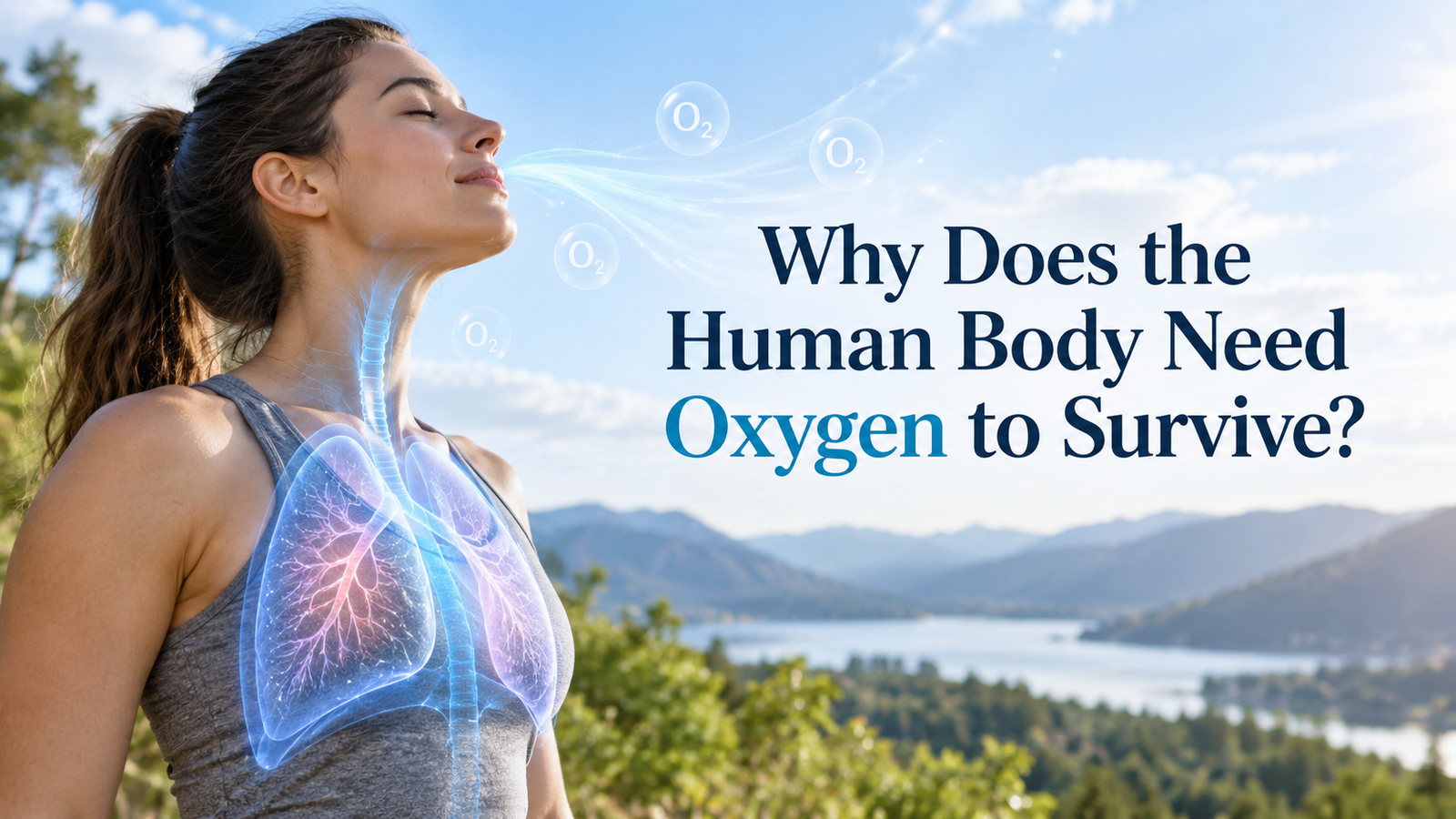
Oxygen is one of the most important elements needed for human life. Every breath we take brings oxygen into our body, where it supports many essential functions. We may not think about oxygen during our daily activities, but our body depends on it every second. From walking and thinking to sleeping and digesting food, oxygen plays an important role in keeping us alive and healthy.
The human body needs oxygen to produce energy, support organ functions, and maintain healthy cells. Without enough oxygen, the brain, heart, and other organs cannot work properly. This is why breathing is a continuous process that continues even while we are sleeping.
Understanding why the human body needs oxygen to survive helps us appreciate how our respiratory system, circulatory system, and cells work together. It also explains why clean air, healthy lungs, and proper breathing are important for overall health.
What Is Oxygen and Why Is It Important?
Oxygen is a natural gas found in the air around us. It makes up approximately 21 percent of the Earth’s atmosphere. Humans, animals, and many other living organisms depend on oxygen to survive.
When we breathe, oxygen enters our lungs and moves into the bloodstream. The blood then transports oxygen to different parts of the body.
Inside our cells, oxygen helps release usable energy from nutrients obtained through food. This energy supports essential activities such as movement, growth, repair, and maintaining body temperature.
The importance of oxygen becomes clearer when we understand that the human body cannot store large amounts of it for future use. As a result, we need a continuous supply through breathing.
Even a short interruption in oxygen delivery can affect sensitive organs, particularly the brain.
How Does Oxygen Enter the Human Body?
The process of bringing oxygen into the body begins with breathing.
When we inhale, air enters through the nose or mouth and travels down the windpipe, which is also called the trachea. The trachea divides into two main airways that carry air into the lungs.
Inside the lungs, these airways divide into smaller passages until they reach millions of tiny air sacs called alveoli.
The alveoli are surrounded by very small blood vessels known as capillaries.
Oxygen passes through the thin walls of the alveoli and enters the blood. At the same time, carbon dioxide moves from the blood into the alveoli so it can leave the body when we exhale.
This exchange of gases is one of the most important functions of the respiratory system.
Healthy lungs allow this process to happen efficiently, helping the body receive the oxygen it needs throughout the day.
How Does Blood Carry Oxygen Around the Body?
After oxygen enters the bloodstream, it must reach the cells and organs that need it.
Red blood cells perform this important task. They contain a protein called hemoglobin, which binds to oxygen in the lungs.
The heart pumps oxygen rich blood through arteries to tissues throughout the body.
As blood moves through small blood vessels, oxygen separates from hemoglobin and enters nearby cells.
These cells use oxygen to support energy production and other important activities.
Blood that has delivered much of its oxygen returns toward the heart through veins. The heart then sends it to the lungs, where it can receive more oxygen.
This continuous circulation connects the respiratory and circulatory systems.
Together, the lungs, heart, blood vessels, and red blood cells make sure oxygen reaches tissues throughout the body.
Why Do Human Cells Need Oxygen?
The main reason the human body needs oxygen is that most cells use it to produce energy efficiently.
Our bodies contain trillions of cells, and each cell performs specific tasks.
Muscle cells help us move, nerve cells transmit information, and skin cells protect the body from the outside environment.
All these activities require energy.
Cells obtain energy from nutrients such as glucose, which comes from the food we eat.
Inside most cells are tiny structures called mitochondria. These structures play an important role in producing energy.
During aerobic cellular respiration, oxygen helps cells convert energy from nutrients into a usable form called adenosine triphosphate, or ATP.
ATP provides energy for many cellular activities, including growth, repair, movement, and communication.
Without enough oxygen, most cells cannot produce ATP as efficiently. Although some energy can still be produced without oxygen, it is usually not enough to support normal body functions for long.
This explains why a steady oxygen supply is essential for human survival.
Why Does the Brain Need a Continuous Supply of Oxygen?
The brain is one of the most oxygen dependent organs in the human body.
Although the brain represents only a small percentage of total body weight, it uses a considerable amount of the body’s energy.
Brain cells need oxygen to maintain electrical activity, transmit messages, and control essential functions.
Every thought, memory, movement, and sensation depends on the activity of nerve cells.
Oxygen also supports the brain regions responsible for breathing, heart rate regulation, and body coordination.
When oxygen delivery to the brain becomes insufficient, a person may experience confusion, dizziness, poor concentration, or loss of consciousness.
A complete interruption of oxygen delivery can cause serious brain injury within minutes.
For this reason, proper breathing and healthy blood circulation are especially important for protecting brain function.
How Does Oxygen Support Heart Function?
The heart works continuously to pump blood throughout the body.
Unlike many other muscles, the heart normally contracts without stopping for rest.
This constant activity requires a reliable supply of energy.
Heart muscle cells contain many mitochondria because they depend heavily on aerobic energy production.
Oxygen reaches the heart muscle through blood vessels called coronary arteries.
When the heart receives enough oxygen, it can continue pumping blood effectively.
However, reduced oxygen delivery to heart tissue may interfere with its normal function.
A severe interruption of blood flow through a coronary artery can damage heart muscle and cause a heart attack.
Maintaining healthy blood circulation is therefore important for delivering oxygen to the heart and supporting cardiovascular health.

Why Do Muscles Need More Oxygen During Exercise?
Have you ever noticed that your breathing becomes faster when you walk quickly, run, or climb stairs?
This happens because working muscles require more energy.
During physical activity, muscle cells increase their energy production to support movement.
To meet this demand, the body increases breathing and heart rate.
Faster breathing helps bring more air into the lungs, while a faster heartbeat helps deliver oxygen to active muscles.
During moderate exercise, muscles can produce much of their required energy through aerobic respiration.
During very intense activity, energy demand may rise faster than oxygen dependent pathways can meet it. Muscles then rely more heavily on energy pathways that do not require oxygen directly.
Regular physical activity can improve how effectively the heart, lungs, and muscles work together.
Over time, many people notice that everyday activities become easier as their cardiovascular fitness improves.
How Does Oxygen Help the Body Produce Energy?
Energy production is one of the most important reasons humans need oxygen to survive.
The food we eat contains nutrients that provide chemical energy.
However, our cells cannot use all this stored energy directly.
Through cellular respiration, cells convert energy from food into ATP.
Oxygen plays a key role in the final stages of aerobic cellular respiration.
Inside mitochondria, oxygen acts as the final electron acceptor in a process that allows cells to generate large amounts of ATP.
Water is formed during this process, while carbon dioxide is produced during other stages of nutrient breakdown.
The carbon dioxide eventually travels through the blood to the lungs and leaves the body through exhalation.
This process helps explain the relationship between breathing, nutrition, and energy.
Eating provides the body with fuel, while oxygen allows most cells to use that fuel efficiently.
Why Is Oxygen Important for Growth and Tissue Repair?
The human body constantly replaces damaged cells and repairs tissues.
Small cuts, normal skin renewal, and muscle recovery all require energy.
Oxygen helps provide the energy needed for these processes.
For example, when a wound begins healing, nearby cells must divide, produce proteins, and rebuild damaged tissue.
These activities require ATP, which is largely produced through oxygen dependent processes.
Adequate oxygen delivery also supports immune cell activity and the formation of healthy new tissue.
When tissues receive insufficient oxygen, wound healing may become slower.
This is one reason healthy circulation is important for recovery after injuries and medical procedures.
Although oxygen alone cannot guarantee fast healing, it is an essential part of the body’s natural repair system.
What Happens When the Body Does Not Get Enough Oxygen?
When the body does not receive enough oxygen, normal cellular functions may become difficult to maintain.
A condition called hypoxemia occurs when oxygen levels in the blood are abnormally low.
Hypoxia refers to insufficient oxygen availability in body tissues.
These conditions are related, but they are not exactly the same.
Low oxygen levels can develop because of breathing problems, certain heart or lung diseases, high altitude, or other medical conditions.
Possible symptoms include shortness of breath, rapid breathing, headache, confusion, and unusual tiredness.
In more serious cases, a person may experience bluish or grayish discoloration of the lips, severe breathing difficulty, or loss of consciousness.
These symptoms can indicate a medical emergency and require immediate attention.
Oxygen deficiency should never be ignored because prolonged or severe oxygen deprivation can damage important organs.
Why Does the Body Remove Carbon Dioxide?
Breathing is not only about taking in oxygen. It also helps remove carbon dioxide.
Carbon dioxide is produced when cells break down nutrients to release energy.
The blood transports much of this carbon dioxide from tissues to the lungs.
When we exhale, carbon dioxide leaves the body.
Removing carbon dioxide is important because it helps maintain a healthy acid balance in the blood.
If too much carbon dioxide accumulates, blood acidity can increase and interfere with normal body functions.
The brain and respiratory system work together to regulate breathing according to the body’s needs.
In healthy people, increased carbon dioxide levels are an important signal that encourages faster or deeper breathing.
This demonstrates how oxygen intake and carbon dioxide removal work together to maintain internal balance.
How Does the Body Maintain Healthy Oxygen Levels?
The human body has several natural systems that help maintain oxygen delivery.
The brain continuously monitors signals related to breathing and blood chemistry.
When physical activity increases, breathing usually becomes faster and deeper.
The heart may also pump more blood to deliver additional oxygen to muscles and organs.
At higher altitudes, where oxygen availability is lower, the body can gradually adapt by changing breathing patterns and increasing red blood cell production.
These adjustments help support oxygen delivery under different conditions.
However, the body’s ability to compensate has limits.
Serious lung disease, heart problems, or severe anemia may prevent tissues from receiving enough oxygen even when these natural responses are active.
This is why the health of the lungs, heart, and blood is important for maintaining normal oxygen supply.
How Can We Support Healthy Oxygen Delivery?
Healthy daily habits can support the body’s ability to breathe and transport oxygen effectively.
Regular physical activity strengthens the cardiovascular system and improves physical endurance.
Walking, swimming, cycling, and other suitable activities can support heart and lung fitness.
Avoiding smoking is especially important because tobacco smoke damages the respiratory system and affects oxygen transport.
Fresh, well ventilated indoor air can also help reduce exposure to certain pollutants.
A balanced diet supports the production of healthy red blood cells. Nutrients such as iron, vitamin B12, and folate are important for normal blood formation.
Drinking enough water supports normal body functions, although extra water does not automatically increase blood oxygen levels.
Getting sufficient sleep and managing existing respiratory conditions can also support overall health.
People with persistent breathing problems should seek medical advice rather than relying only on breathing exercises or home remedies.
Does Deep Breathing Increase Oxygen in the Blood?
Many people believe that taking very deep breaths always increases oxygen levels.
However, the reality is more complicated.
In healthy individuals at rest, hemoglobin is usually already close to fully saturated with oxygen.
Taking extra deep breaths may not significantly increase blood oxygen levels under normal conditions.
Controlled breathing can still help some people feel calmer and become more aware of their breathing patterns.
It may also be useful in certain relaxation practices.
However, repeatedly breathing too quickly or too deeply can lower carbon dioxide levels and cause dizziness or tingling.
Deep breathing should not be considered a treatment for serious oxygen deficiency.
If someone experiences severe shortness of breath or signs of dangerously low oxygen, medical assessment is necessary.
Why Is Oxygen Essential Even During Sleep?
Although our bodies appear to rest during sleep, many important functions continue.
The heart keeps pumping blood, the brain remains active, and cells continue producing energy.
The body also performs important maintenance and recovery processes while we sleep.
All these functions require oxygen.
Breathing normally continues automatically because specialized brain regions regulate it without conscious effort.
Some sleep disorders, such as obstructive sleep apnea, can interrupt normal breathing and cause repeated drops in blood oxygen levels.
These interruptions may disturb sleep quality and affect health over time.
Loud snoring, repeated gasping during sleep, and excessive daytime sleepiness can be reasons to discuss possible sleep apnea with a healthcare professional.
Healthy breathing during sleep is therefore an important part of maintaining overall wellness.
Final Thoughts
The human body needs oxygen to survive because oxygen supports efficient energy production inside cells. Without a continuous oxygen supply, vital organs such as the brain and heart cannot maintain their normal functions.
Every breath helps connect several important body systems. The lungs absorb oxygen, the blood transports it, the heart circulates it, and cells use it to produce energy.
Oxygen also supports physical movement, tissue repair, brain activity, and many processes that keep the body functioning.
Understanding the importance of oxygen reminds us that breathing is much more than a simple physical action. It is part of a complex biological system that supports life every moment.
By taking care of our lungs, heart, and overall health, we can help our bodies maintain the oxygen delivery needed for everyday activities and long term well being.
The simple answer to why the human body needs oxygen to survive is that oxygen allows our cells to produce the energy required to keep us alive. Without it, life sustaining processes cannot continue for long.