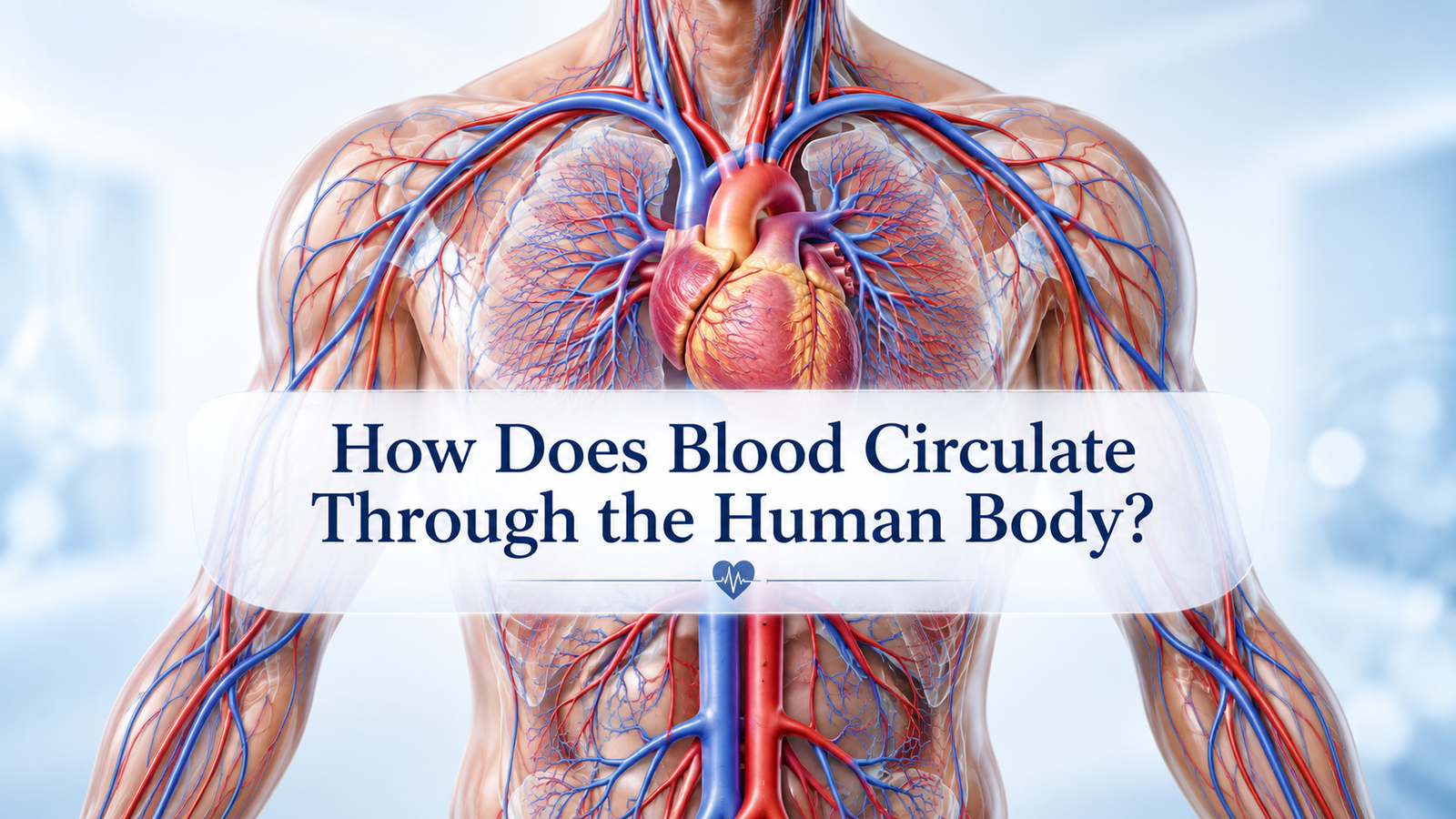
Blood circulation is one of the most important processes taking place inside the human body. Every second, blood travels through a complex network of blood vessels, delivering oxygen and nutrients to different organs and tissues. At the same time, it collects carbon dioxide and other waste materials that the body needs to remove. This continuous movement of blood keeps our organs working and helps us stay alive.
The human circulatory system works throughout the day and night, even when we are sleeping. The heart acts as a powerful pump, while arteries, veins, and capillaries provide pathways for blood to travel. Understanding how blood circulates through the human body helps us appreciate the role of the heart and the importance of maintaining good cardiovascular health.
In this article, we will explore how blood circulation works, the different parts of the circulatory system, and the factors that influence healthy blood flow.
What Is Blood Circulation?
Blood circulation is the continuous movement of blood through the heart and blood vessels. It allows essential substances to reach every part of the body while helping remove unwanted materials.
The circulatory system consists of three main components: the heart, blood, and blood vessels. These components work together to maintain a steady supply of oxygen and nutrients.
When we breathe, oxygen enters the lungs and passes into the bloodstream. The heart then pumps oxygen rich blood toward the body’s organs and tissues. After delivering oxygen, the blood returns to the heart and travels to the lungs, where carbon dioxide is released.
This cycle continues throughout our lives without requiring conscious effort.
Blood circulation also helps regulate body temperature, transport hormones, and support the immune system.
The Main Parts of the Human Circulatory System
To understand how blood circulates through the human body, it is helpful to learn about the structures responsible for moving and transporting blood.
1. The Heart
The heart is a muscular organ located in the chest, slightly toward the left side. It is approximately the size of a person’s fist, although its size varies depending on age and body structure.
The heart contains four chambers. The two upper chambers are called atria, while the two lower chambers are called ventricles.
The right atrium receives blood returning from the body, and the right ventricle pumps it toward the lungs. The left atrium receives oxygen rich blood from the lungs, while the left ventricle pumps it throughout the body.
Heart valves help ensure that blood flows in the correct direction.
2. Arteries
Arteries are blood vessels that carry blood away from the heart.
Most arteries transport oxygen rich blood to the body’s organs and tissues. Their walls are thick, muscular, and elastic, allowing them to withstand the pressure created by the heartbeat.
The aorta is the largest artery in the human body. It carries blood from the left ventricle toward smaller arteries that supply different body regions.
One important exception is the pulmonary artery, which carries oxygen poor blood from the heart to the lungs.
3. Veins
Veins carry blood back toward the heart.
Most veins transport blood that has already delivered much of its oxygen to body tissues. Many veins, particularly those in the legs, contain valves that help prevent blood from flowing backward.
The superior and inferior vena cava are two large veins that return blood from the body to the right atrium.
Pulmonary veins are different because they carry oxygen rich blood from the lungs to the heart.
4. Capillaries
Capillaries are extremely small blood vessels that connect the smallest arteries to the smallest veins.
Their walls are very thin, allowing oxygen, nutrients, carbon dioxide, and other substances to move between blood and surrounding tissues.
Capillaries are essential because they provide the main locations where exchange occurs between blood and body cells.
How Does Blood Circulate Through the Human Body?
The process of blood circulation follows an organized pathway involving the heart, lungs, and body tissues.
Although blood moves continuously, we can understand the process by dividing it into several steps.
Step 1: Blood Returns From the Body to the Heart
After supplying oxygen and nutrients to different tissues, blood contains less oxygen and more carbon dioxide.
This oxygen poor blood travels through veins toward the heart.
Blood from the upper body enters through the superior vena cava, while blood from the lower body enters through the inferior vena cava.
Both vessels deliver blood into the right atrium.
Step 2: Blood Moves Into the Right Ventricle
When the right atrium contracts, blood passes through the tricuspid valve and enters the right ventricle.
The tricuspid valve helps prevent blood from returning to the right atrium when the ventricle contracts.
Step 3: Blood Travels to the Lungs
The right ventricle contracts and pushes blood through the pulmonary valve into the pulmonary arteries.
These arteries carry oxygen poor blood toward the lungs.
Inside the lungs, the pulmonary arteries divide into smaller vessels that eventually form capillary networks around tiny air sacs called alveoli.

Step 4: Blood Receives Oxygen in the Lungs
The alveoli are responsible for exchanging gases between inhaled air and blood.
Oxygen moves from the air inside the alveoli into the bloodstream. Meanwhile, carbon dioxide moves from the blood into the alveoli and leaves the body when we breathe out.
Hemoglobin, a protein found in red blood cells, binds to oxygen and helps transport it throughout the body.
This process allows blood to become rich in oxygen again.
Step 5: Oxygen Rich Blood Returns to the Heart
After receiving oxygen, blood travels through the pulmonary veins and enters the left atrium.
The left atrium contracts, allowing blood to pass through the mitral valve into the left ventricle.
The left ventricle has thick muscular walls because it must generate enough pressure to move blood throughout the body.
Step 6: Blood Is Pumped Throughout the Body
When the left ventricle contracts, blood passes through the aortic valve and enters the aorta.
From there, it travels through smaller arteries and arterioles until it reaches capillaries in different organs and tissues.
Oxygen and nutrients move from the blood into nearby cells, while carbon dioxide and certain waste products enter the bloodstream.
After this exchange, blood begins its journey back toward the heart.
The entire cycle repeats continuously.
What Are the Two Main Types of Blood Circulation?
The human body has two major circulation pathways called pulmonary circulation and systemic circulation.
Pulmonary Circulation
Pulmonary circulation describes the movement of blood between the heart and lungs.
Its primary purpose is to allow blood to release carbon dioxide and receive oxygen.
Blood leaves the right ventricle, travels to the lungs, and returns to the left atrium.
This pathway is essential for maintaining adequate oxygen levels in the bloodstream.
Systemic Circulation
Systemic circulation carries blood between the heart and the rest of the body.
Oxygen rich blood leaves the left ventricle and travels through arteries toward organs, muscles, and tissues.
After exchanging gases and nutrients, blood returns through veins to the right atrium.
Systemic circulation provides cells with the materials they need to produce energy and perform their functions.
Together, these two pathways create a continuous circulation system.
How Does the Heart Keep Blood Moving?
The heart maintains blood circulation through repeated cycles of contraction and relaxation.
When the heart muscle contracts, it pushes blood out of its chambers. When it relaxes, the chambers fill with blood again.
These two phases are known as systole and diastole.
During systole, the ventricles contract and pump blood into the pulmonary artery and aorta.
During diastole, the ventricles relax and fill with blood.
The heartbeat is controlled by electrical signals that begin in a specialized group of cells called the sinoatrial node.
This natural pacemaker helps coordinate the rhythm of the heart.
For many healthy adults at rest, the heart beats approximately 60 to 100 times per minute. However, heart rate varies depending on fitness, age, activity, medications, and health conditions.
What Role Does Blood Pressure Play in Circulation?
Blood pressure is the force that circulating blood exerts against the walls of blood vessels.
It helps drive blood through the arteries toward different parts of the body.
Blood pressure is usually expressed using two numbers.
Systolic pressure represents the pressure in the arteries when the heart contracts.
Diastolic pressure represents the pressure when the heart relaxes between beats.
Blood pressure changes naturally throughout the day in response to physical activity, emotional stress, sleep, and other factors.
Consistently high blood pressure can place additional strain on the heart and blood vessels.
Maintaining healthy blood pressure is therefore important for supporting normal circulation.
Why Is Blood Circulation Important for the Human Body?
Blood circulation performs several functions necessary for survival.
Delivering Oxygen
Body cells require oxygen to produce energy efficiently.
Blood carries oxygen from the lungs to tissues where it is used in cellular respiration.
Without an adequate supply of oxygen, cells cannot function normally.
Transporting Nutrients
After digestion, many nutrients enter the bloodstream through the small intestine.
Blood transports substances such as glucose, amino acids, vitamins, and minerals to tissues that need them.
These nutrients support growth, repair, and everyday cellular activities.
Removing Waste Products
Normal cellular activity produces waste materials that must be removed.
Blood transports carbon dioxide to the lungs, where it is released during exhalation.
It also carries substances to the kidneys and liver, which help process or eliminate waste.
Regulating Body Temperature
Blood circulation helps distribute heat throughout the body.
When body temperature rises, blood vessels near the skin may widen, allowing more heat to escape.
When the body becomes cold, certain blood vessels narrow to reduce heat loss.
Supporting the Immune System
Blood contains white blood cells and other components involved in protecting the body against infections.
Circulation helps immune cells and protective substances reach different tissues.
It also allows platelets and clotting proteins to reach damaged blood vessels and help control bleeding.
How Does Exercise Affect Blood Circulation?
Physical activity increases the demand for oxygen and nutrients in working muscles.
To meet this demand, the heart beats faster and pumps more blood.
Blood vessels supplying active muscles widen, allowing greater blood flow.
Regular physical activity can improve cardiovascular fitness and help the heart perform its work more efficiently.
Activities such as walking, cycling, swimming, and moderate exercise can support circulatory health.
The benefits of exercise usually develop gradually when physical activity becomes a consistent part of daily life.
What Happens When Blood Circulation Becomes Poor?
Poor blood circulation occurs when blood flow to certain areas of the body is reduced or disrupted.
It may develop because of narrowed arteries, blood clots, problems with veins, or certain medical conditions.
Possible symptoms include cold hands or feet, numbness, unusual skin color changes, swelling, or pain during walking.
However, these symptoms can have several different causes and do not always indicate a circulation problem.
Reduced blood flow can sometimes damage tissues if they do not receive enough oxygen.
Sudden severe limb pain, a cold or pale limb, chest pain, or symptoms of a stroke require immediate medical attention.
Understanding possible warning signs can help people seek medical evaluation when necessary.
How Can We Maintain Healthy Blood Circulation?
Healthy daily habits can support the heart and blood vessels over time.
Stay Physically Active
Regular movement encourages healthy blood flow and supports cardiovascular fitness.
Walking, using stairs, cycling, and other suitable activities can help reduce long periods of inactivity.
Eat a Balanced Diet
A diet containing vegetables, fruits, whole grains, legumes, and appropriate sources of protein provides nutrients that support general cardiovascular health.
Limiting excessive sodium, highly processed foods, and unhealthy fats can also be beneficial.
Drink Enough Water
Adequate hydration helps maintain normal blood volume and supports many body functions.
Fluid requirements vary depending on climate, physical activity, diet, and health conditions.
Avoid Smoking
Smoking damages blood vessels and increases the risk of cardiovascular disease.
Avoiding tobacco and secondhand smoke can help protect the circulatory system.
Maintain Healthy Sleep Habits
Adequate sleep supports normal cardiovascular function and helps the body recover from daily activities.
Monitor Important Health Factors
Regular monitoring of blood pressure, blood cholesterol, and blood glucose can help identify risk factors that may affect cardiovascular health.
Medical guidance is particularly important for people with existing heart or blood vessel conditions.
Interesting Facts About Human Blood Circulation
The circulatory system has several remarkable features.
The heart begins beating before birth and continues working throughout life.
An average adult has approximately five liters of blood, although the exact amount varies with body size and other factors.
At rest, the heart typically pumps around five liters of blood each minute.
Blood travels through an extensive network of vessels, including arteries, veins, and microscopic capillaries.
The heart muscle also requires its own supply of oxygen rich blood. This is delivered through the coronary arteries.
These facts show how closely the circulatory system is connected with the functioning of every organ.
Conclusion
Understanding how blood circulates through the human body helps explain one of the most essential processes required for life.
The heart continuously pumps blood through arteries, veins, and capillaries. Pulmonary circulation allows blood to exchange gases in the lungs, while systemic circulation delivers oxygen and nutrients throughout the body.
Every heartbeat contributes to this process, helping cells receive important substances and allowing waste products to be removed.
Healthy blood circulation depends on the coordinated work of the heart, blood vessels, lungs, and other organs. Regular physical activity, balanced nutrition, adequate hydration, good sleep, and avoiding tobacco can support cardiovascular health.
By understanding how the circulatory system works and adopting healthy habits, we can take meaningful steps toward protecting our hearts and maintaining overall health.