
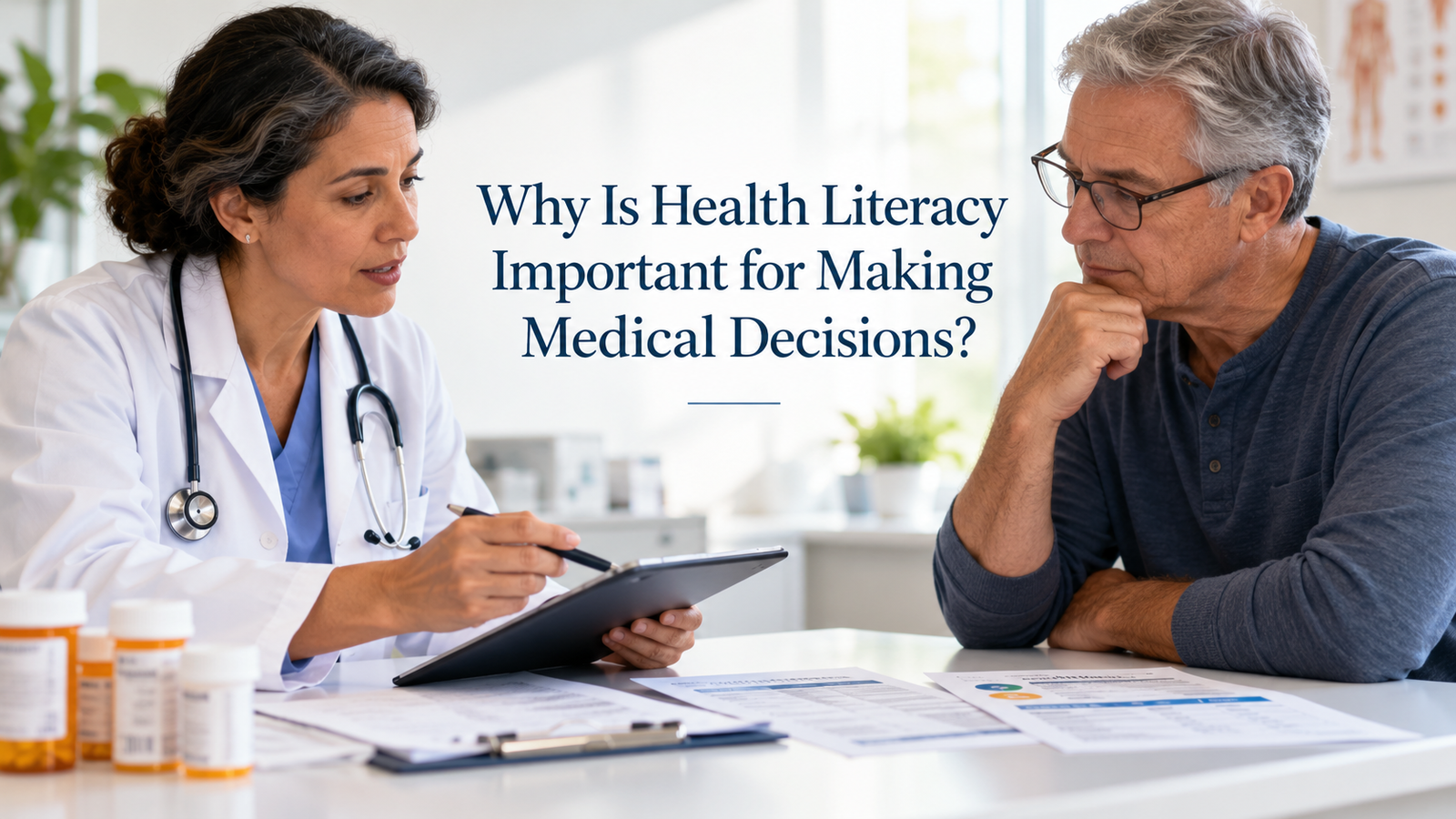
Health literacy plays an important role in helping people understand their health and make informed medical decisions. Every day, people face situations where they need to understand medical advice, choose treatments, follow prescriptions, or decide whether to visit a healthcare professional. These decisions become easier when individuals have the knowledge and confidence to understand health information.
Medical information can sometimes be confusing. Doctors use scientific terms, medicine labels contain instructions, and health reports include numbers that may be difficult to understand. Without proper health literacy, people may struggle to recognize important information or make decisions that support their wellbeing.
Health literacy is not only about reading medical documents. It also involves asking questions, understanding risks, comparing treatment options, and communicating effectively with healthcare providers.
Learning about health literacy helps individuals become more responsible and confident when managing their health. It also encourages better communication between patients and healthcare professionals.
What Is Health Literacy?
Health literacy refers to the ability to find, understand, evaluate, and use health information to make appropriate medical decisions.
It includes several important skills, such as reading medicine instructions, understanding medical reports, discussing symptoms, and recognizing reliable sources of health information.
For example, a person with good health literacy can understand why a doctor recommends a particular treatment. They can also ask about possible side effects and learn how to follow medical instructions correctly.
Health literacy does not require someone to become a medical expert. Instead, it helps ordinary people understand the information necessary to participate in decisions about their healthcare.
Healthcare organizations also have a responsibility to explain medical information clearly. Even educated individuals may find medical language difficult, especially when they are sick, worried, or facing an unfamiliar diagnosis.
Why Is Health Literacy Important in Healthcare?
Health literacy is important because medical decisions can influence a person’s health, treatment experience, and quality of life.
When individuals understand their medical conditions, they are better prepared to discuss treatment options and follow professional recommendations.
For example, someone diagnosed with high blood pressure may need to understand why regular monitoring, physical activity, dietary changes, and prescribed medication are important.
Without clear information, the person may not recognize the purpose of these recommendations.
Good health literacy also helps people identify situations that require professional medical attention.
It encourages individuals to seek appropriate care rather than relying entirely on guesses, rumors, or unverified information.
How Health Literacy Supports Better Medical Decisions
Making a medical decision often involves understanding different choices and considering their possible benefits and risks.
Health literacy helps patients participate in this process.
A patient may need to decide whether to undergo a medical procedure, begin a medication, or choose between available treatment options.
Before making a decision, the patient should understand why the treatment is recommended, what results are expected, and what possible complications may occur.
Health literacy makes these discussions more meaningful.
For example, a person considering surgery may ask about recovery time, alternative treatments, possible complications, and the expected benefits.
Understanding the answers allows the patient to make a decision based on reliable information and personal circumstances.
This process is often called shared decision making because patients and healthcare professionals work together to select suitable care.
Understanding Medical Instructions and Prescriptions
One of the most practical benefits of health literacy is the ability to understand medical instructions.
Medicines are often prescribed with specific directions about dosage, timing, and duration.
Patients must understand these instructions to use medicines safely.
For example, some medicines must be taken with food, while others have different requirements. Certain treatments also require regular monitoring.
A misunderstanding about dosage or frequency can lead to medication errors.
Health literacy encourages patients to read prescription labels carefully and ask questions whenever instructions are unclear.
It also helps people understand that medicines should not be shared simply because two individuals appear to have similar symptoms.
Following professional medical advice is important because treatment requirements vary according to age, medical history, existing conditions, and other medicines being used.
The Role of Health Literacy in Disease Prevention
Health literacy is not limited to treating existing illnesses. It also contributes to disease prevention.
People who understand health information may be better prepared to recognize preventable health risks and adopt healthier daily habits.
For example, learning about the relationship between smoking and respiratory diseases can help individuals understand why avoiding tobacco is beneficial.
Similarly, understanding nutrition can encourage balanced eating habits and appropriate portion sizes.
Knowledge about physical activity, personal hygiene, vaccination, and preventive healthcare also supports better health decisions.
Health literacy helps people understand why certain preventive measures are recommended rather than simply following instructions without knowing their purpose.
Although knowledge alone does not guarantee healthier behavior, it provides an important foundation for making informed choices.
How Health Literacy Improves Communication With Doctors
Effective communication is essential for quality healthcare.
Patients need to explain their symptoms, medical history, concerns, and treatment experiences accurately.
At the same time, doctors must communicate medical information in language that patients can understand.
Health literacy supports communication by encouraging patients to ask relevant questions and request explanations.
For example, a patient may ask why a particular blood test is necessary or what an unusual result means.
Instead of remaining silent, the patient can request simpler language or additional information.
Patients can also repeat important instructions in their own words to confirm that they have understood them correctly.
This approach helps healthcare professionals identify misunderstandings and explain instructions more clearly.
Better communication can improve patient satisfaction, strengthen trust, and support safer medical care.
Understanding Medical Tests and Health Reports
Medical tests provide important information about the condition of the human body.
Common examples include blood tests, urine tests, X rays, ultrasound examinations, and other diagnostic procedures.
However, medical reports often contain technical terms and reference ranges that may confuse patients.
Health literacy helps individuals understand the general purpose of these tests and why doctors recommend them.
For example, a blood glucose test measures the amount of glucose in the blood and may help healthcare professionals assess diabetes risk or management.
Understanding the purpose of the test can help patients appreciate the importance of appropriate follow up.
However, laboratory results should not be interpreted without considering symptoms, medical history, and other relevant factors.
A result outside a reference range does not always indicate a serious illness.
Health literacy includes recognizing when professional interpretation is necessary.
Health Literacy and Chronic Disease Management
Chronic diseases often require continuous medical care and long term lifestyle adjustments.
Conditions such as diabetes, asthma, high blood pressure, and heart disease may require regular monitoring and treatment.
Patients who understand their conditions may find it easier to participate in their care.
For example, a person living with diabetes may need to understand blood glucose monitoring, meal planning, physical activity, and prescribed treatment.
Someone with asthma may need to learn the correct inhaler technique and recognize symptoms that require urgent medical attention.
Health literacy supports these responsibilities by helping patients understand their treatment plans.
It also encourages individuals to communicate changes in symptoms and discuss difficulties with healthcare professionals.
Managing a chronic condition can be complicated, but clear information makes daily responsibilities more understandable.
Identifying Reliable Health Information
The internet has made health information widely available.
People can now search for symptoms, medicines, diseases, and treatments within seconds.
Although online resources can be helpful, not every website provides accurate medical information.
Some websites publish misleading claims, incomplete explanations, or advertisements presented as medical advice.
Health literacy helps people evaluate the reliability of health information before using it.
Reliable sources usually explain medical topics clearly, identify qualified authors or reviewers, and provide information based on established scientific evidence.
Government health agencies, recognized medical institutions, and established healthcare organizations can be useful starting points.
Readers should also check whether information is current and whether the source is attempting to sell a product.
Online information can support learning, but it should not replace individualized medical advice when diagnosis or treatment decisions are required.
The Importance of Health Literacy for Patient Safety
Patient safety involves reducing preventable harm during healthcare.
Health literacy contributes to patient safety by helping individuals understand instructions, recognize possible problems, and communicate concerns.
For example, a patient who understands the importance of reporting medication allergies can provide information that helps healthcare professionals select safer treatments.
Similarly, patients should know when to seek assistance if they experience unexpected symptoms after beginning a new medicine.
Understanding appointment instructions, preparation for medical procedures, and follow up recommendations also supports safer care.
However, responsibility for patient safety does not belong only to patients.
Healthcare professionals and medical institutions must provide clear explanations and create systems that reduce the possibility of misunderstanding.
Health literacy works best when patients receive understandable information and appropriate professional support.
How Health Literacy Helps Families Make Healthcare Decisions
Health decisions often involve more than one person.
Parents make healthcare decisions for children, while adults may help older family members understand treatments and appointments.
Family members sometimes assist with reading prescriptions, arranging medical visits, and discussing treatment options.
Health literacy can make these responsibilities easier.
For example, parents who understand childhood vaccination recommendations are better prepared to discuss their children’s immunization needs with healthcare professionals.
Similarly, caregivers who understand medication schedules may be better able to support relatives who need assistance.
Families should also respect the preferences, privacy, and decision making rights of the person receiving care.
Good health literacy encourages supportive discussions without replacing the patient’s own voice.
Common Barriers to Health Literacy
Several factors can make health information difficult to understand.
Medical terminology is one of the most common barriers. Healthcare professionals may use unfamiliar words that have specific scientific meanings.
Language differences can also create communication problems.
A patient who does not understand the language used during an appointment may struggle to follow instructions.
Limited access to reliable information, difficulties with reading, and unfamiliar digital technology can create additional challenges.
Stress and illness may also affect a person’s ability to understand and remember medical explanations.
These barriers show why healthcare information should be presented in simple, respectful, and accessible language.
Pictures, translated materials, qualified interpreters, and clear written instructions can help people understand medical information.
Practical Ways to Improve Health Literacy
Health literacy can improve through education, practice, and regular communication with reliable healthcare professionals.
People do not need advanced medical knowledge to develop useful health literacy skills.
They can begin by learning the meaning of common medical terms and understanding basic information about the human body.
Reading educational materials from trustworthy sources can also improve medical knowledge.
Before a healthcare appointment, writing down symptoms and questions may help patients remember important concerns.
During the appointment, patients should feel comfortable requesting explanations of unfamiliar words.
They can also ask healthcare professionals to explain the purpose of medicines, tests, and treatments.
Keeping an updated list of medications and important health information can support clearer communication.
Another useful habit is checking health claims before sharing or acting on them.
These simple practices can gradually improve confidence when dealing with medical information.
How Healthcare Providers Can Support Health Literacy
Healthcare professionals have an important role in making medical information easier to understand.
Doctors, nurses, pharmacists, and other healthcare workers should communicate in clear language and avoid unnecessary technical expressions.
They can explain complicated topics using everyday examples.
Written instructions should also be easy to read and organized around the information patients need most.
Healthcare providers can encourage questions and confirm patient understanding without making people feel embarrassed.
Using the teach back method, where patients explain instructions in their own words, can help identify communication gaps.
Providing information in appropriate languages and accessible formats is also important.
When healthcare organizations prioritize clear communication, patients are better equipped to understand their options and participate in decisions.
The Connection Between Health Literacy and Quality of Life
Health literacy can influence many aspects of daily life.
People frequently make choices about food, exercise, sleep, medical appointments, medicines, and preventive care.
Understanding the possible health effects of these choices can support more informed behavior.
For example, someone who understands the importance of sleep may be more motivated to maintain a consistent sleeping schedule.
A person who understands the value of regular medical monitoring may be more likely to attend recommended appointments.
Health literacy can also reduce confusion during medical discussions and help patients feel more confident when asking questions.
However, good health outcomes depend on many factors, including access to healthcare, financial circumstances, living conditions, and the quality of medical services.
Health literacy is an important part of wellbeing, but it is not the only factor that determines health.
Conclusion
Health literacy is essential for making informed medical decisions because it helps individuals understand health information, communicate with healthcare professionals, and participate actively in their care.
It supports safer medicine use, better understanding of medical tests, disease prevention, and management of long term health conditions.
Health literacy also helps people recognize reliable information and avoid making important medical decisions based on misleading claims.
Improving health literacy does not mean learning every medical term or becoming an expert in healthcare. It means developing the ability to ask questions, understand explanations, and use trustworthy information appropriately.
Healthcare professionals also have a responsibility to make information understandable and accessible.
When patients and healthcare providers communicate clearly, medical decisions can become more informed, respectful, and appropriate for individual needs.


