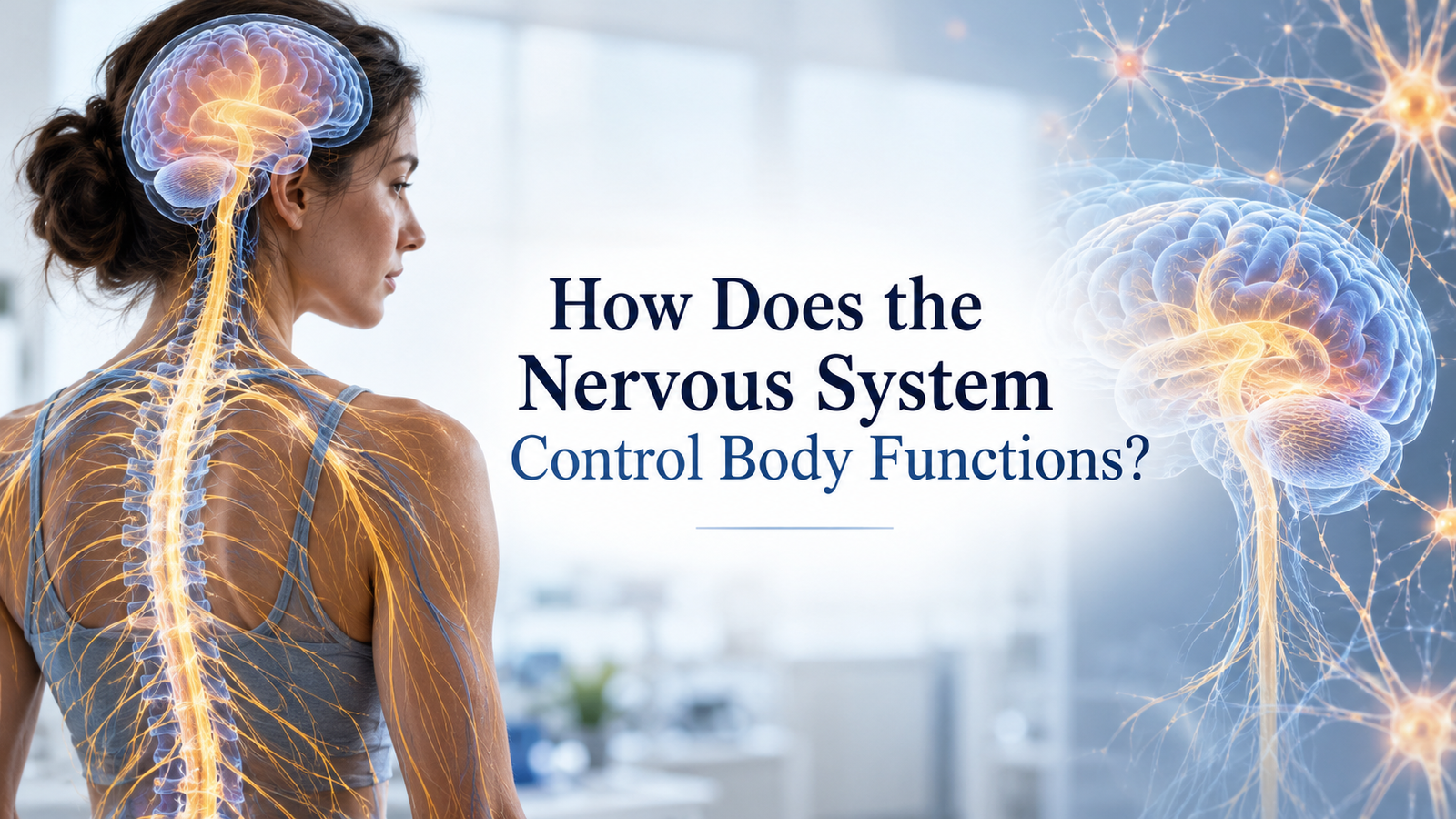
The human body performs thousands of activities every day. We walk, breathe, eat, think, sleep, and respond to our surroundings without always noticing how these actions happen. Behind these activities is a remarkable communication network called the nervous system. It helps different parts of the body work together and makes sure that important functions continue properly.
The nervous system controls body functions by receiving information, processing signals, and sending instructions to different organs and muscles. It allows us to move our hands, recognize sounds, feel pain, remember information, and respond to changes around us. It also helps regulate automatic activities such as breathing, heartbeat, digestion, and body temperature.
Understanding how the nervous system works gives us a clearer picture of how the human body stays active, organized, and healthy.
What Is the Nervous System?
The nervous system is a complex network of nerves, specialized cells, and organs that control and coordinate activities throughout the body. Its main purpose is to collect information, understand what that information means, and produce an appropriate response.
For example, when someone touches a hot surface, the nervous system quickly detects the heat and helps the person pull their hand away. Similarly, when we see food, the brain processes visual information and may trigger feelings of hunger.
The nervous system works continuously, even when we are sleeping. It helps maintain important body activities and allows communication between the brain and other organs.
Without a functioning nervous system, the body would struggle to coordinate movements, process sensations, and regulate many essential processes.
Main Parts of the Human Nervous System
The human nervous system is divided into two main parts. Each has a different role, but both work together to control body functions.
1. Central Nervous System
The central nervous system consists of the brain and spinal cord. It acts as the main control and processing center of the body.
The brain receives information from different parts of the body, interprets it, and helps determine how the body should respond. It controls thinking, memory, emotions, movement, and many automatic functions.
The spinal cord connects the brain with much of the body. It carries nerve signals between the brain and other regions. It also coordinates certain quick responses called reflexes.
Together, the brain and spinal cord help organize information and produce suitable responses.
2. Peripheral Nervous System
The peripheral nervous system includes nerves located outside the brain and spinal cord. These nerves connect the central nervous system with the skin, muscles, internal organs, and other body structures.
The peripheral nervous system carries sensory information toward the central nervous system and delivers instructions from it to muscles and organs.
For example, when we decide to pick up a glass of water, the brain sends movement instructions through peripheral nerves to the muscles in the arm and hand.
This communication allows the body to respond to both voluntary decisions and automatic signals.
How Does the Brain Control Body Functions?
The brain is one of the most important organs in the human body. It acts as a central processing and control center for many nervous system activities.
Different regions of the brain perform different functions.
The cerebrum is involved in conscious thinking, learning, memory, sensory processing, and voluntary movement. It helps us understand language, recognize people, and make decisions.
The cerebellum helps coordinate movements, balance, and posture. It allows muscles to work smoothly when we walk, run, or perform activities requiring accuracy.
The brainstem connects the brain with the spinal cord and helps regulate vital functions such as breathing, heart rate, and swallowing.
The hypothalamus also plays an important role in maintaining internal balance. It helps regulate hunger, thirst, body temperature, and several hormone related processes.
Although these brain regions have specialized responsibilities, they constantly communicate with one another.
This teamwork allows the brain to manage many activities at the same time.
How Do Nerve Cells Send Messages?
The nervous system depends on specialized cells called neurons. These cells are responsible for transmitting information throughout the body.
Neurons communicate using electrical signals and chemical messengers.
A typical neuron contains a cell body, dendrites, and an axon. Dendrites receive incoming information, while the axon carries electrical impulses away from the cell body.
When a nerve signal reaches the end of an axon, it can trigger the release of chemicals called neurotransmitters. These chemicals carry messages across small spaces called synapses.
The receiving cell detects the neurotransmitters and responds according to the type of signal.
This communication happens extremely quickly and allows the nervous system to coordinate different activities.
For example, when we hear an unexpected loud sound, sensory nerves send information toward the brain. The brain processes the sound and may direct the body to turn toward its source.
Millions of neurons work together in complex networks to make this communication possible.
How Does the Nervous System Control Muscle Movement?
Muscle movement is one of the clearest examples of nervous system control.
When we decide to move, areas of the brain involved in movement planning and control generate signals. These signals travel through nerve pathways to the muscles.
At the connection between a motor neuron and a skeletal muscle fiber, a neurotransmitter called acetylcholine helps trigger muscle contraction.
This process allows us to perform activities such as writing, walking, lifting objects, and speaking.
The nervous system also receives feedback from muscles and joints. This information helps the brain adjust movement and maintain coordination.
For example, while climbing stairs, the nervous system continuously monitors body position and muscle activity. It helps us maintain balance and adjust our movements.
Without this communication, even simple physical tasks would become difficult.
How Does the Nervous System Control Breathing?
Breathing is essential because it supplies oxygen to the body and removes carbon dioxide.
The nervous system helps regulate breathing automatically through networks located mainly in the brainstem.
These networks generate signals that activate the diaphragm and other breathing muscles.
As the diaphragm contracts, air enters the lungs. When it relaxes, air moves out as part of the normal breathing cycle.
The nervous system also monitors changes in carbon dioxide and blood acidity. These changes help determine whether breathing needs to become faster or deeper.
For example, during exercise, muscles produce more carbon dioxide. The nervous system responds by increasing breathing to help meet the body’s changing needs.
Although breathing usually happens automatically, we can also control it voluntarily for short periods.
This combination of automatic and conscious control makes breathing a fascinating example of nervous system coordination.
How Does the Nervous System Control Heart Rate?
The heart pumps blood throughout the body, delivering oxygen and nutrients to organs and tissues.
The heart has its own electrical system that generates the signals responsible for its regular contractions. However, the nervous system can influence how quickly the heart beats.
The autonomic nervous system plays an important role in this process.
During physical activity or emotional excitement, sympathetic nerve signals can increase heart rate and the strength of heart contractions.
During rest, parasympathetic signals help slow the heart rate.
For example, when someone starts running, the body needs more oxygen. The nervous system helps the cardiovascular system respond by increasing heart activity.
When the person relaxes, the heart rate gradually returns toward its resting level.
This regulation supports circulation under different conditions.
How Does the Nervous System Help With Digestion?
Digestion involves several organs working together to break down food, absorb nutrients, and remove waste.
The nervous system helps coordinate these activities through both the autonomic nervous system and the enteric nervous system.
The enteric nervous system is a network of nerve cells located within the walls of the digestive tract.
It helps regulate intestinal movement, digestive secretions, and other digestive processes.
After we eat, nerve signals help coordinate movements that push food through the stomach and intestines.
The parasympathetic nervous system generally supports digestive activity, while sympathetic activity can reduce certain digestive functions during stressful situations.
For example, when a person feels frightened or anxious, digestion may slow or become uncomfortable.
This happens partly because the nervous system changes how the digestive organs operate.
The relationship between the brain and digestive system shows how closely different body functions are connected.
What Is the Role of the Autonomic Nervous System?
Many body functions happen without conscious effort. We do not need to remember to make our heart beat or control every movement of our intestines.
These automatic activities are regulated partly by the autonomic nervous system.
It has two major divisions that often produce different effects.
Sympathetic Nervous System
The sympathetic nervous system helps prepare the body for demanding situations.
When someone faces danger or sudden stress, sympathetic activity may increase heart rate, widen the airways, and direct more blood toward skeletal muscles.
This response is commonly known as the fight or flight response.
It helps the body prepare for rapid action.
Parasympathetic Nervous System
The parasympathetic nervous system generally supports activities associated with rest, recovery, and digestion.
It can slow the heart rate and encourage certain digestive processes.
These two divisions work together to adjust body functions according to changing needs.
Their activity is not simply an on and off system. Both can influence different organs continuously, helping the body maintain appropriate conditions.
How Does the Nervous System Control Reflex Actions?
A reflex is a rapid, automatic response to a particular stimulus.
Reflexes help protect the body and support important functions.
For example, when a person accidentally touches something extremely hot, sensory receptors in the skin detect the harmful stimulus.
Signals travel through sensory nerves to the spinal cord. Spinal cord circuits can quickly activate motor neurons that cause the hand to move away.
The brain receives information about the event as well, allowing the person to become aware of the pain.
Because the initial withdrawal response can be coordinated through the spinal cord, it does not need to wait for conscious decision making.
Other reflexes include blinking when something approaches the eyes and certain automatic muscle responses.
These reactions demonstrate how the nervous system can respond quickly to potential danger.
How Does the Nervous System Control Body Temperature?
The human body needs to maintain its internal temperature within a suitable range.
The hypothalamus, a small region of the brain, plays a central role in temperature regulation.
It receives information from temperature sensitive receptors in the body and helps coordinate responses.
When body temperature rises, the nervous system can stimulate sweat production and changes in blood flow near the skin.
Sweating helps cool the body as moisture evaporates.
When the body becomes cold, the nervous system may trigger shivering. This involuntary muscle activity generates heat.
It can also influence blood vessel narrowing near the skin to reduce heat loss.
These responses help the body maintain a relatively stable internal environment, which is essential for normal cell function.
How Does the Nervous System Process Pain and Sensations?
Our ability to feel touch, pressure, heat, cold, and pain depends on sensory receptors and nerve pathways.
These receptors detect changes inside and outside the body.
When someone steps on a sharp object, specialized sensory nerve endings detect potentially damaging stimulation.
Signals travel through the nervous system to the spinal cord and brain, where they contribute to the experience of pain.
Pain can encourage protective behavior by drawing attention to possible injury.
Similarly, receptors in the skin allow us to recognize the texture and temperature of objects.
Sensory information also helps us understand where our body parts are located without looking at them.
This ability, called proprioception, is essential for balance and coordinated movement.
Through these sensory systems, the brain continuously receives information needed to guide behavior.
How Does the Nervous System Work With Hormones?
The nervous system and endocrine system cooperate to regulate many body functions.
While neurons send rapid electrical and chemical messages, endocrine glands release hormones into the bloodstream.
Hormones influence processes such as growth, metabolism, reproduction, and stress responses.
The hypothalamus connects nervous system activity with hormonal regulation.
It communicates with the pituitary gland, which helps control several other endocrine glands.
For example, during stressful situations, the brain can activate pathways that influence the release of stress hormones.
These hormones help the body adapt to demanding conditions.
The nervous and endocrine systems therefore provide different but closely connected forms of communication.
How Does Sleep Support the Nervous System?
Sleep is an important biological process that supports healthy nervous system function.
During sleep, the brain continues working. It processes information, supports memory formation, and participates in processes involved in maintaining brain health.
Adequate sleep helps improve attention, learning, emotional regulation, and reaction time.
Poor sleep can make concentration difficult and may affect coordination and judgment.
The nervous system also helps regulate the sleep and wake cycle through interactions involving the brain, light exposure, and biological rhythms.
Maintaining regular sleep habits supports these processes and contributes to overall well being.
How Can We Keep the Nervous System Healthy?
Healthy daily habits can support normal nervous system function.
Eating a balanced diet provides nutrients that nerves and brain cells need. Vitamins such as B12 are particularly important for maintaining normal nerve function.
Regular physical activity supports circulation, cardiovascular health, and several aspects of brain function.
Getting enough sleep allows the body and brain to recover from daily demands.
Managing stress through relaxation, exercise, and enjoyable activities can also support emotional and physical health.
Avoiding smoking, limiting alcohol, and protecting the head and spine from injury are important preventive measures.
Learning new skills, reading, solving problems, and maintaining social connections can help support cognitive health.
Although these habits cannot prevent every neurological condition, they contribute to overall health and well being.
What Happens When the Nervous System Is Damaged?
Damage to the nervous system can interfere with communication between the brain, spinal cord, and body.
The effects depend on the location, severity, and cause of the damage.
Some conditions affect movement, while others influence sensation, memory, coordination, or automatic functions.
For example, injury to a peripheral nerve may cause numbness, tingling, weakness, or pain in the affected area.
Damage involving the brain or spinal cord can produce more widespread difficulties.
Neurological conditions such as stroke, epilepsy, Parkinson’s disease, and multiple sclerosis affect the nervous system in different ways.
Early medical assessment can be important when unusual neurological symptoms appear.
Sudden weakness, facial drooping, difficulty speaking, or sudden loss of vision requires emergency medical attention because these symptoms may indicate a stroke.
Understanding the importance of the nervous system encourages people to recognize symptoms and seek appropriate care.
Conclusion
The nervous system is one of the body’s most important communication and control networks. It connects the brain, spinal cord, nerves, muscles, and organs so they can work together efficiently.
From conscious movements such as walking and speaking to automatic activities such as breathing, digestion, and heart rate regulation, the nervous system helps coordinate almost every aspect of daily life.
It receives information from the surroundings, processes sensory signals, supports learning and memory, and helps the body respond to changing conditions.
The nervous system also works closely with hormones and other regulatory systems to maintain internal balance.
By understanding how the nervous system controls body functions, we gain a better appreciation of the remarkable coordination taking place inside us every moment.
Healthy habits, proper nutrition, regular exercise, adequate sleep, and timely medical care can all support nervous system health and help the body function effectively throughout life.