Viruses are tiny infectious agents that can enter the human body, infect living cells, and cause different types of diseases. Although viruses are much smaller than most bacteria, they can have a significant effect on human health. Some viruses cause mild illnesses, such as the common cold, while others can lead to serious infections that require medical attention.
Understanding how viruses enter and spread inside the human body is an important part of health education. It helps us understand why infections develop, how our immune system responds, and why certain preventive measures are necessary.
The human body has several natural defense systems that protect it from harmful microorganisms. However, some viruses can overcome these defenses and begin multiplying inside healthy cells.
This article explains how viruses enter the human body, how they reproduce, how infections spread through different organs, and how the immune system works to control them.
What Are Viruses?
Viruses are microscopic infectious agents that cannot reproduce independently. Unlike human cells, viruses do not have the complete cellular machinery needed to produce energy and make new copies of themselves.
Instead, they depend on living host cells for reproduction.
A virus generally contains genetic material surrounded by a protective protein covering called a capsid. The genetic material may be DNA or RNA, depending on the type of virus.
Some viruses also have an outer envelope made mainly of lipids and proteins. This envelope can help certain viruses attach to and enter human cells.
Different viruses have different structures, characteristics, and methods of infection.
For example, influenza viruses mainly infect the respiratory system, while hepatitis viruses can infect the liver. Human immunodeficiency virus, commonly known as HIV, primarily targets certain cells of the immune system.
These differences help explain why viral infections can affect different parts of the human body.
How Do Viruses Enter the Human Body?
Viruses can enter the human body through several pathways. The method of entry depends on the type of virus and how it spreads between people.
The most common entry routes include the respiratory system, digestive system, damaged skin, mucous membranes, and direct contact with infected blood or other body fluids.
1. Entry Through the Respiratory System
The respiratory system is one of the most common entry points for viruses.
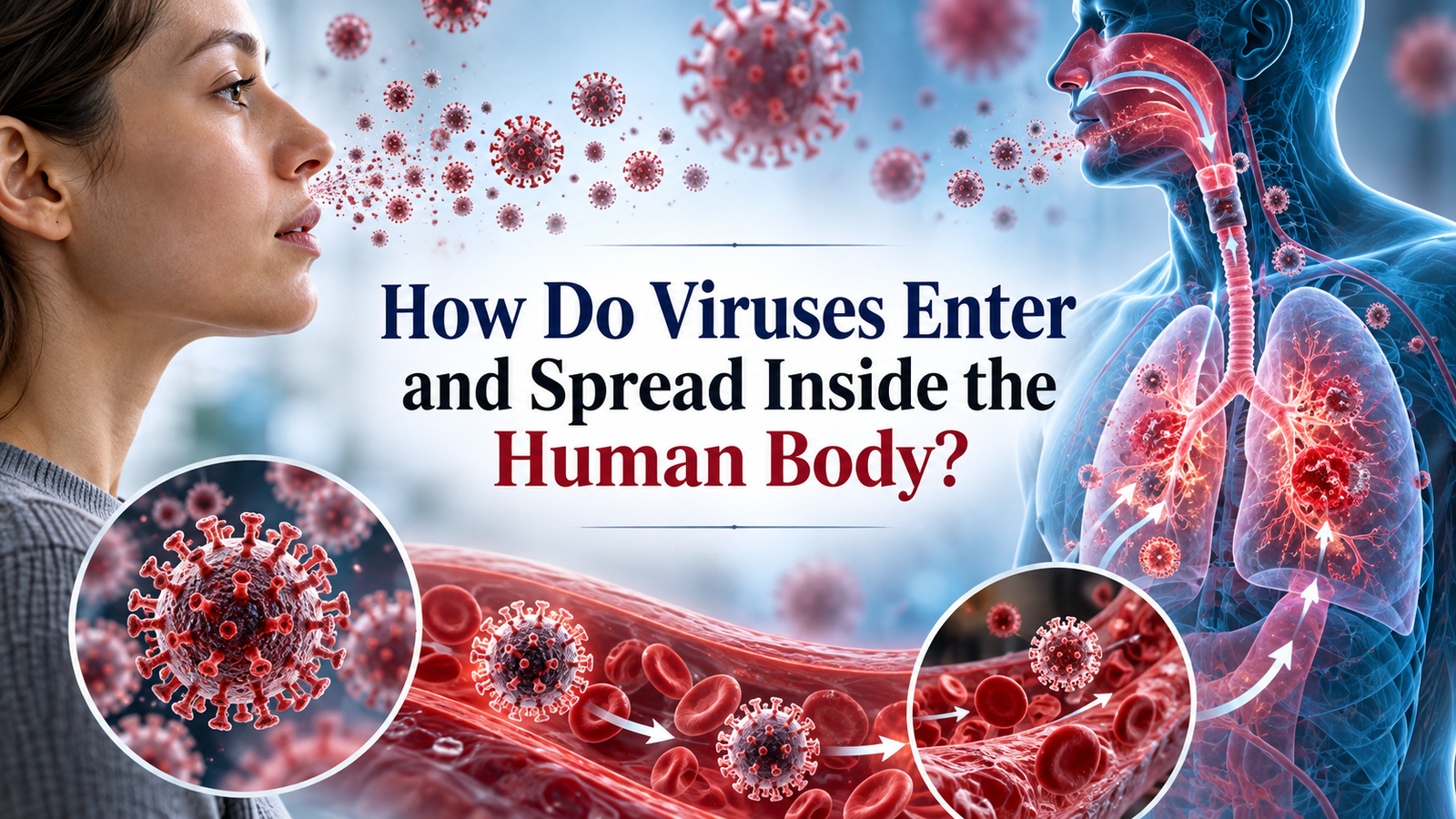
When an infected person breathes, talks, coughs, or sneezes, they may release respiratory particles containing viruses into the surrounding air.
Other people can become infected when they inhale infectious particles.
These particles may enter through the nose or mouth and reach the tissues of the respiratory tract.
Viruses such as influenza viruses, respiratory syncytial virus, and SARS CoV 2 can spread through respiratory particles.
Once inside the respiratory tract, the virus may attach to suitable cells and begin the infection process.
2. Entry Through the Digestive System
Some viruses enter the body when a person consumes contaminated food or water.
These viruses travel through the digestive system and may infect cells in the intestines.
Norovirus and rotavirus are examples of viruses that commonly cause gastrointestinal infections.
Such infections may produce symptoms including diarrhea, vomiting, stomach discomfort, and dehydration.
Good food hygiene, safe drinking water, and proper handwashing help reduce the risk of these infections.
3. Entry Through Damaged Skin
Healthy skin provides an important protective barrier against infectious agents.
However, cuts, wounds, scratches, and punctures can create entry points for certain viruses.
For example, the rabies virus can enter the body through bites from infected animals when virus containing saliva reaches broken skin or mucous membranes.
Some viruses can also spread when infected material comes into contact with damaged skin.
Cleaning wounds properly and receiving appropriate medical care after potentially infectious exposures can help prevent complications.
4. Entry Through Blood and Body Fluids
Certain viruses spread through infected blood or specific body fluids.
HIV, hepatitis B virus, and hepatitis C virus are important examples, although their transmission routes differ.
Possible routes include sharing contaminated needles, certain forms of sexual contact, and transmission from mother to child during pregnancy, childbirth, or breastfeeding, depending on the virus.
Blood screening, sterile medical equipment, and appropriate preventive healthcare measures help reduce transmission risks.
How Do Viruses Attach to Human Cells?
After entering the body, a virus must reach a suitable host cell before it can reproduce.
Human cells contain different proteins and structures on their surfaces. Some of these structures act as receptors that particular viruses can recognize.
A virus may have surface proteins that bind to specific receptors on a human cell.
This interaction is often compared to a key fitting into a lock.
However, receptor attachment alone does not always guarantee infection. Other cellular conditions and proteins may also be necessary.
For example, SARS CoV 2 can attach to ACE2 receptors on susceptible human cells, with additional cellular processes helping the virus enter.
Different viruses recognize different cellular receptors.
This is one reason why certain viruses infect particular tissues more easily than others.
Once a virus successfully attaches to a suitable cell, it may begin the next stage of infection.
How Do Viruses Enter Human Cells?
After attaching to a host cell, the virus must deliver its genetic material into the cell.
Different viruses use different methods to accomplish this.
Some enveloped viruses can fuse their outer membrane with a cellular membrane. Others enter through a process called endocytosis, in which the cell surrounds and brings material inside.
After entering, the virus releases its genetic material into an appropriate location within the cell.
This stage is often called uncoating.
The viral genetic material then begins directing cellular processes needed for viral reproduction.
The exact steps vary depending on whether the virus contains DNA or RNA and how its replication machinery works.
At this point, the virus has gained access to the cellular environment needed to produce new viral components.
How Do Viruses Multiply Inside the Human Body?
Viral multiplication is called replication.
Viruses cannot reproduce in the same independent way as living cells. They must use resources and machinery available inside infected host cells.
The replication process generally involves several stages.
Stage 1: Attachment
The virus recognizes and attaches to a suitable receptor or other entry factor on the surface of a host cell.
Stage 2: Entry
The virus or its genetic material enters the host cell through a process appropriate to that virus.
Stage 3: Uncoating
The protective viral covering is removed or opened, allowing the genetic material to become available for replication.
Stage 4: Production of Viral Components
The infected cell produces viral proteins and copies of the viral genetic material.
Some viruses use enzymes that they carry into the cell, while others depend more heavily on cellular enzymes.
Stage 5: Assembly
New viral genetic material and proteins come together to form new virus particles.
Stage 6: Release
New virus particles leave the infected cell and may infect additional susceptible cells.
Some viruses damage or destroy cells during release. Others leave through budding or related processes without immediately killing the host cell.
Through repeated replication cycles, the number of virus particles can increase substantially.
This process allows an infection to become established and spread through susceptible tissues.
How Do Viruses Spread From One Cell to Another?
Once new virus particles are released, they may encounter nearby cells.
If these cells contain the receptors and conditions required for infection, the viruses can enter and begin another replication cycle.
This creates a continuing chain of infection within the affected tissue.
For example, a respiratory virus may initially infect cells lining the nose or throat.
As replication continues, additional cells in the surrounding respiratory tissues may become infected.
Some viruses remain largely confined to their original infection site.
Others can travel to distant tissues through different routes within the body.
The extent of viral spread depends on factors such as the virus involved, the body’s immune response, and the availability of susceptible cells.
How Do Viruses Travel Through the Bloodstream?
Certain viruses can enter the bloodstream during infection.
The presence of viruses or viral particles in the blood is known as viremia.
When this happens, viruses may travel through the circulatory system and reach tissues away from the original entry point.
However, not every viral infection produces significant viremia.
Some viruses spread mainly within local tissues, while others use the bloodstream as an important route to reach different organs.
The body’s immune defenses may remove circulating viruses before they establish additional infections.
Therefore, the presence of a virus in the bloodstream does not automatically mean that every organ will become infected.
Can Viruses Spread Through the Nervous System?
Some viruses can infect nervous tissue or travel along nerves.
The rabies virus provides an important example.
After entering through an infected animal bite, the rabies virus can infect local tissues and eventually travel through peripheral nerves toward the central nervous system.
This movement differs from the way many respiratory viruses spread.
Other viruses may reach nervous tissue through the bloodstream or additional biological pathways.
Because the nervous system controls many essential body functions, infections affecting the brain or spinal cord can sometimes cause serious complications.
Fortunately, many viral infections never involve the nervous system.
How Does the Immune System Recognize Viruses?
The immune system plays a major role in protecting the body against viral infections.
When a virus enters the body, immune cells and infected cells can recognize certain viral components or signs of infection.
This activates different defense mechanisms.
One of the early responses involves proteins called interferons.
Interferons help nearby cells activate antiviral defenses and can limit viral replication.
Other immune cells help identify infected cells, remove infectious material, and coordinate the body’s response.
As the infection develops, the adaptive immune system may produce a more targeted response.
B cells can produce antibodies that recognize specific viral structures.
These antibodies may block viruses from entering cells or help other immune mechanisms remove them.
T cells also play an important role. Certain T cells recognize and destroy infected cells, reducing the number of places where viruses can reproduce.
Together, these defenses help control infections and support recovery.
Why Do Viral Infections Cause Symptoms?
The symptoms of a viral infection can develop for several reasons.
Some symptoms result directly from damage to infected cells.
Others occur because of the body’s immune response.
For example, fever can develop when immune signaling molecules influence the brain’s temperature regulation system.
Inflammation may cause swelling, discomfort, or irritation in affected tissues.
Respiratory infections may produce coughing, a sore throat, nasal congestion, and tiredness.
Gastrointestinal infections may cause vomiting, diarrhea, and abdominal discomfort.
Symptoms vary depending on the infected organs, the type of virus, and the individual response.
Importantly, some people can carry and transmit certain viruses without developing noticeable symptoms.
This makes prevention especially important because a person may not always know when an infection is present.
How Long Does a Virus Stay Inside the Human Body?
The duration of a viral infection varies considerably.
Some infections are cleared or controlled within days or weeks.
Others may persist for months, years, or even throughout a person’s lifetime.
For example, many common respiratory infections resolve relatively quickly as the immune system brings viral replication under control.
However, some viruses can establish long lasting infections.
Herpes simplex viruses can remain in a dormant state in nerve cells and reactivate later.
Certain hepatitis viruses can cause chronic infections that require medical monitoring and treatment.
HIV can persist in the body because it establishes long lasting infected cell reservoirs.
These examples show that viruses do not all behave in the same way after entering the body.
The ability of a virus to remain hidden, persist, or reactivate depends on its biological characteristics and the immune response.
What Factors Affect the Spread of Viruses Inside the Body?
Several factors influence how a viral infection develops.
Type of virus: Different viruses have different replication methods, preferred tissues, and abilities to spread.
Immune system response: A well functioning immune system can often limit viral multiplication and reduce the severity of infection.
Age: Infants, older adults, and people of different age groups may face different risks depending on the virus.
Existing health conditions: Certain medical conditions and treatments can affect the body’s ability to control infections.
Amount and route of exposure: The quantity of infectious virus entering the body and the entry pathway can influence infection risk and, in some situations, disease severity.
Vaccination history: Appropriate vaccination can help the immune system recognize particular viruses more quickly and reduce the risk of infection or serious illness, depending on the vaccine.
These factors help explain why the same virus may produce different outcomes in different people.
How Can We Prevent Viruses From Entering the Body?
Although viruses are present in many environments, several everyday practices can reduce the chances of infection.
Practice Proper Hand Hygiene
Washing hands with soap and clean water helps remove many harmful microorganisms.
Handwashing is particularly important before eating, after using the toilet, and after contact with potentially contaminated surfaces.
Maintain Respiratory Hygiene
Covering coughs and sneezes, improving indoor ventilation, and avoiding close contact with others when sick can reduce the spread of respiratory infections.
Well fitting masks may provide additional protection in situations where respiratory virus exposure is more likely.
Follow Recommended Vaccination Schedules
Vaccines prepare the immune system to recognize specific infectious agents.
Recommended vaccinations can prevent certain viral diseases or reduce their severity.
Practice Food and Water Safety
Safe food preparation and clean drinking water are essential for reducing the spread of viruses that affect the digestive system.
Avoid Contact With Contaminated Blood
Using sterile medical equipment and never sharing needles helps prevent infections transmitted through blood.
Seek Appropriate Medical Care
Early medical advice may be important after certain exposures, including animal bites or potential contact with bloodborne viruses.
For example, rabies exposure requires urgent medical assessment because timely preventive treatment can save lives.
Why Is Understanding Viral Spread Important?
Learning how viruses enter and spread inside the human body helps us understand the relationship between infection, immunity, and disease prevention.
It also explains why doctors may recommend different treatments or preventive measures for different viral illnesses.
Antibiotics are designed to treat bacterial infections and do not directly treat viral infections.
Certain viral diseases can be treated with antiviral medicines, but these medications are usually designed for specific viruses or groups of viruses.
Understanding viral replication also helps scientists develop vaccines, diagnostic tests, and treatments.
Researchers study how viruses attach to cells, copy their genetic material, and interact with the immune system.
This knowledge supports the development of better ways to prevent infections and protect public health.
Conclusion
Viruses enter the human body through several pathways, including the respiratory tract, digestive system, damaged skin, and exposure to infected blood or body fluids. After entering, they must reach suitable host cells, attach to cellular receptors or entry factors, and deliver their genetic material into the cells.
Once inside, viruses use cellular resources to produce new virus particles. These particles may infect nearby cells or, in some cases, travel through the bloodstream or nervous system to reach other tissues.
The immune system works continuously to recognize infected cells, limit viral replication, and help the body recover. While many viral infections resolve naturally, others may persist or cause serious health problems.
Understanding how viruses enter and spread inside the human body highlights the importance of vaccination, personal hygiene, safe food and water, and responsible healthcare practices.
By learning how viral infections develop, we can make informed decisions that help protect our own health and the health of people around us.
This article is intended for general health education and does not replace professional medical advice.