
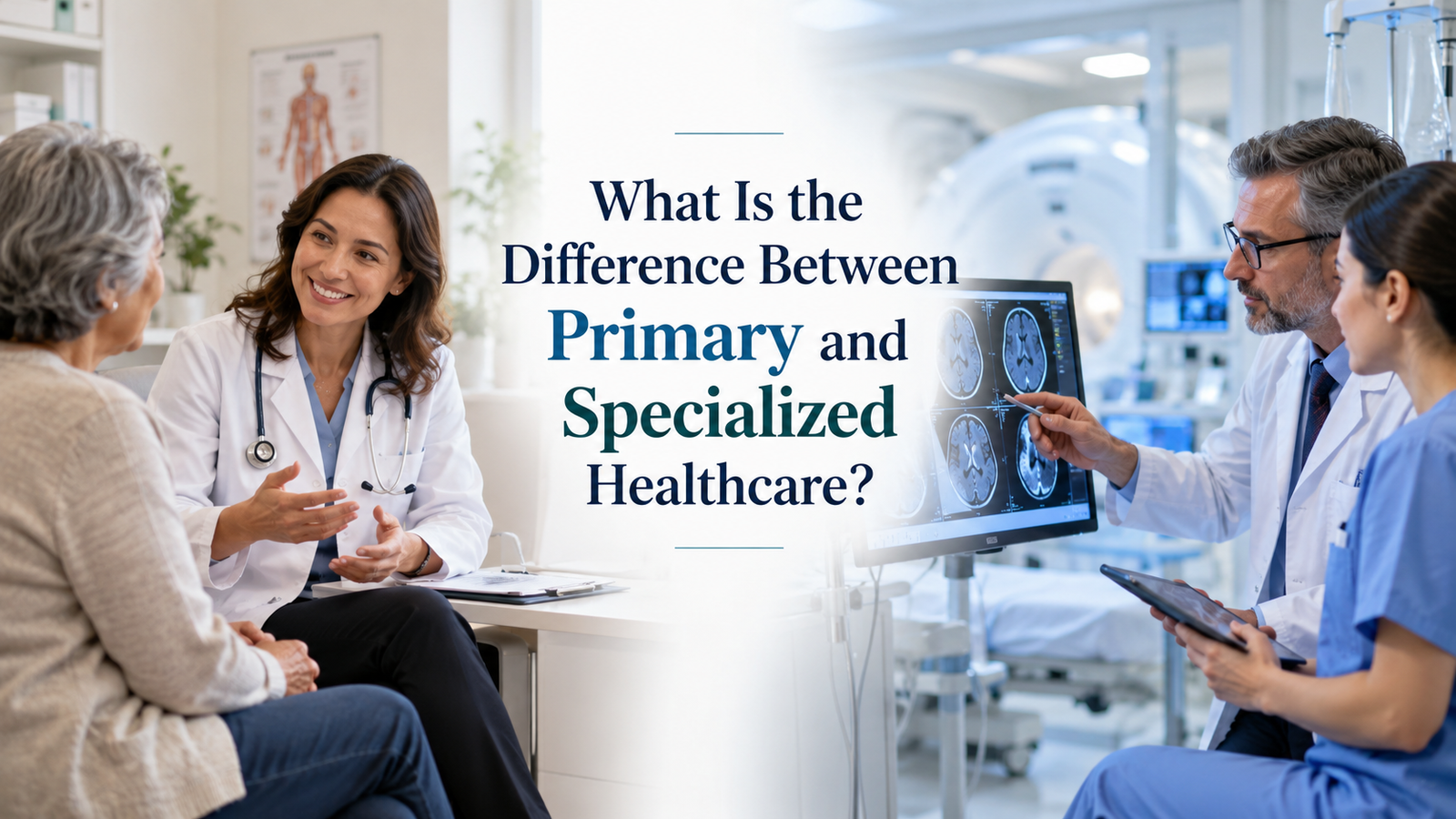
Healthcare is an important part of human life because it helps people prevent diseases, manage health problems, and receive medical treatment when necessary. However, not every health condition requires the same type of medical attention. Some health problems can be treated by a general doctor, while others require the knowledge and experience of a medical specialist.
This is where understanding the difference between primary and specialized healthcare becomes important. Both types of healthcare play essential roles in maintaining individual and community health, but they serve different purposes.
Primary healthcare focuses on general medical needs, disease prevention, and routine treatment. Specialized healthcare provides advanced medical services for conditions that require specific medical knowledge, equipment, or procedures.
Learning how these healthcare services work can help individuals make informed decisions about their health and understand when professional medical attention is necessary.
What Is Primary Healthcare?
Primary healthcare is usually the first level of medical care that people receive when they experience health problems or need general health advice. It provides accessible and comprehensive healthcare services for individuals and families.
Primary healthcare professionals commonly include family doctors, general practitioners, nurses, and other trained healthcare workers.
These professionals help patients manage common illnesses, monitor existing health conditions, and understand ways to maintain good health.
For example, when a person develops a fever, cough, headache, or mild stomach problem, visiting a primary healthcare provider is often an appropriate first step.
Primary healthcare also includes preventive services such as vaccinations, health screenings, nutritional guidance, and regular medical examinations.
The main purpose of primary healthcare is to provide continuous medical support while identifying health problems before they become more serious.
What Is Specialized Healthcare?
Specialized healthcare refers to medical services provided by healthcare professionals who have advanced training in particular areas of medicine.
These professionals are known as medical specialists. They diagnose and treat specific diseases, complex conditions, and health problems that may require advanced medical investigations or procedures.
For example, a cardiologist specializes in heart diseases, while a neurologist focuses on conditions affecting the brain and nervous system.
Similarly, dermatologists treat skin conditions, and orthopedic specialists manage problems involving bones, joints, and muscles.
Specialized healthcare may involve advanced diagnostic tests, specialized medications, surgery, or long term medical management.
Patients sometimes receive specialized healthcare after being referred by a primary healthcare provider. However, referral requirements vary depending on the healthcare system and the services available.
The purpose of specialized healthcare is to provide focused medical expertise for conditions that require more detailed evaluation or treatment.
Main Differences Between Primary and Specialized Healthcare
Although primary and specialized healthcare work toward the same goal of improving human health, several important differences exist between them.
| Primary Healthcare | Specialized Healthcare |
|---|---|
| Provides general medical care | Focuses on specific medical conditions |
| Often serves as the first point of contact | May involve referral to a specialist |
| Treats common illnesses | Manages complex or specialized conditions |
| Emphasizes prevention and routine care | Emphasizes focused diagnosis and treatment |
| Provides continuous healthcare support | Provides care within a particular medical field |
| Usually requires fewer specialized resources | May require advanced equipment or procedures |
These differences explain why both forms of healthcare are necessary within a well organized medical system.
Primary healthcare supports everyday health needs, while specialized healthcare offers additional expertise when required.
The Role of Primary Healthcare in Disease Prevention
One of the most important functions of primary healthcare is preventing diseases before they cause serious health problems.
Healthcare professionals educate patients about healthy lifestyles, proper nutrition, physical activity, personal hygiene, and the importance of regular medical examinations.
Preventive healthcare can reduce the risk of developing certain illnesses and help individuals recognize early warning signs.
For example, routine blood pressure measurements may identify hypertension before noticeable symptoms appear.
Similarly, blood sugar testing can help detect diabetes in people who may be at increased risk.
Vaccinations are another important part of preventive healthcare because they protect individuals and communities against certain infectious diseases.
Primary healthcare also supports health education by explaining how everyday habits influence physical and mental wellbeing.
Through prevention and early identification, primary healthcare contributes to healthier communities and better long term health outcomes.
The Role of Specialized Healthcare in Treating Complex Diseases
Some diseases require medical knowledge and treatment that go beyond routine healthcare services.
Specialized healthcare becomes particularly important when patients experience complicated symptoms, serious diseases, or conditions that require advanced medical procedures.
For example, a person with a complex heart condition may need an evaluation by a cardiologist.
The specialist may recommend tests such as an echocardiogram or other examinations to understand the condition.
Similarly, patients with certain neurological disorders may require detailed investigations and treatment from a neurologist.
Cancer care may involve several specialists, including oncologists, surgeons, and radiation specialists.
Specialized healthcare allows patients to receive treatment designed around their particular medical conditions.
This focused approach can improve diagnostic accuracy and support effective management of complicated health problems.
Healthcare Professionals Involved in Primary Care
Primary healthcare depends on several types of trained professionals who work together to provide medical support.
Family physicians and general practitioners are important members of this healthcare system.
They examine patients, evaluate symptoms, prescribe appropriate treatments, and recommend further investigations when necessary.
Nurses also play essential roles by monitoring patients, providing health education, assisting with preventive services, and supporting disease management.
Community health workers may help people understand basic healthcare practices and connect them with available medical services.
In some healthcare systems, pharmacists, midwives, and other professionals also contribute to primary healthcare.
The involvement of different healthcare professionals helps make essential medical services more accessible to the population.
Common Types of Specialized Healthcare
Specialized healthcare includes many medical fields that focus on particular organs, diseases, or body systems.
Cardiology: Cardiologists diagnose and manage diseases affecting the heart and blood vessels.
Neurology: Neurologists evaluate conditions involving the brain, spinal cord, and nerves.
Dermatology: Dermatologists specialize in diagnosing and treating skin, hair, and nail conditions.
Orthopedics: Orthopedic specialists manage conditions affecting bones, joints, ligaments, and muscles.
Gastroenterology: Gastroenterologists focus on disorders involving the digestive system, including the stomach, intestines, and liver.
Endocrinology: Endocrinologists diagnose and manage hormone related conditions, including certain types of diabetes and thyroid disorders.
Oncology: Oncologists specialize in cancer diagnosis, treatment, and ongoing medical management.
Each specialty requires additional medical education and clinical training.
These medical fields help healthcare systems address conditions that need focused professional expertise.
How Primary and Specialized Healthcare Work Together
Primary and specialized healthcare are not competing services. Instead, they complement each other by providing different levels of medical support.
Consider a patient who experiences frequent headaches.
The patient may initially visit a primary healthcare provider for an examination.
The doctor reviews the symptoms, medical history, and possible causes.
If the headaches suggest a more complicated neurological condition, the doctor may recommend further evaluation by a neurologist.
After specialist assessment, the patient may continue receiving routine monitoring from the primary healthcare provider.
This cooperation helps maintain continuity of care while allowing patients to access specialist knowledge when necessary.
Communication between healthcare professionals is particularly important for people living with chronic diseases.
A coordinated approach can help reduce unnecessary duplication of tests, improve treatment planning, and support patient safety.
When Should Someone Visit a Primary Healthcare Provider?
Primary healthcare is appropriate for many common medical needs.
People may visit a primary healthcare provider for routine health examinations, common infections, vaccination advice, nutritional guidance, and management of stable chronic conditions.
For example, someone experiencing mild seasonal allergies may benefit from an initial consultation with a general practitioner.
A person who wants advice about managing body weight or improving daily health habits may also seek primary healthcare services.
Regular primary care visits can be especially useful for individuals who need ongoing monitoring of blood pressure, blood sugar, or other health indicators.
However, serious symptoms such as severe chest pain, major breathing difficulty, sudden weakness, or loss of consciousness require urgent emergency medical attention rather than a routine appointment.
When Is Specialized Healthcare Necessary?
Specialized healthcare may become necessary when a medical condition requires advanced knowledge, detailed investigations, or treatment beyond routine medical services.
For example, a person with persistent digestive symptoms may be referred to a gastroenterologist if initial investigations suggest a condition requiring specialist evaluation.
Someone experiencing complicated joint problems may need an orthopedic consultation.
Patients with unusual skin changes may benefit from an assessment by a dermatologist.
Specialized care may also be required for certain surgeries, complex pregnancies, advanced cancer treatment, or difficult chronic diseases.
The decision to seek specialized healthcare depends on the nature of the condition, available services, and medical advice.
Not every medical problem requires a specialist, but timely specialist assessment can be important when a condition cannot be adequately managed through general care.
Accessibility and Cost of Healthcare Services
Accessibility is another important difference between primary and specialized healthcare.
Primary healthcare services are often available through local clinics, community health centers, and general medical practices.
These services are designed to provide essential healthcare to a broad population.
Specialized healthcare may be concentrated in larger hospitals or medical centers because advanced equipment and specialist training require additional resources.
As a result, patients may need to travel farther to access certain specialist services.
The cost of specialized healthcare can also be higher, particularly when advanced investigations, surgery, or complex treatments are involved.
However, healthcare costs vary considerably between countries, hospitals, insurance systems, and public healthcare programs.
Strengthening primary healthcare can help reduce avoidable hospital visits and support the efficient use of healthcare resources.
Importance of Primary Healthcare in Rural Communities
Primary healthcare is especially valuable in rural and underserved communities where specialized medical facilities may be limited.
Local healthcare centers provide essential services that might otherwise require patients to travel long distances.
These services may include maternal healthcare, childhood immunizations, treatment of common infections, and basic health education.
Community healthcare professionals also help identify patients who need further medical assessment.
For example, a rural healthcare worker may recognize symptoms that require evaluation at a larger hospital.
Effective referral systems allow patients to move between different healthcare facilities according to their medical needs.
Improving rural primary healthcare can support early treatment, increase health awareness, and reduce inequalities in access to essential medical services.
Technology in Primary and Specialized Healthcare
Modern technology has influenced both primary and specialized healthcare.
Digital medical records allow healthcare professionals to organize patient information and improve communication.
Telemedicine can help patients receive certain consultations without traveling to a healthcare facility.
In primary healthcare, digital systems may support appointment scheduling, routine monitoring, and follow up consultations.
Specialists may use advanced imaging technologies, laboratory investigations, and specialized medical devices to diagnose complicated conditions.
For example, magnetic resonance imaging can provide detailed images of certain internal body structures.
Remote consultations may also help primary healthcare providers obtain specialist opinions when local expertise is unavailable.
Although technology improves healthcare opportunities, it cannot replace every physical examination or medical procedure.
The appropriate use of technology depends on the patient’s condition and the judgment of qualified healthcare professionals.
Why Both Types of Healthcare Are Important
A strong healthcare system needs both primary and specialized healthcare because individuals experience different medical needs throughout their lives.
Primary healthcare provides a foundation for disease prevention, early diagnosis, health education, and regular medical support.
Specialized healthcare addresses conditions that require additional professional expertise and advanced treatment methods.
Without effective primary healthcare, preventable conditions may remain undetected until they become more serious.
Without specialized healthcare, patients with complicated diseases may struggle to receive appropriate diagnosis and treatment.
When both services work together, healthcare systems can provide more complete and coordinated medical care.
This cooperation supports individual wellbeing while improving the overall quality of healthcare delivery.
Frequently Asked Questions
Is primary healthcare the same as general healthcare?
Primary healthcare is a broad approach to essential health services, including general medical care, prevention, health education, and ongoing support. General medical care is an important part of primary healthcare, but the two terms are not completely identical.
Can patients visit medical specialists directly?
Yes. In some healthcare systems, patients can consult specialists directly. Other healthcare systems or insurance arrangements may require referrals from primary healthcare providers.
Is specialized healthcare always better than primary healthcare?
No. The most appropriate type of healthcare depends on the patient’s medical needs. Primary healthcare is suitable for many everyday health concerns, while specialized healthcare is important for conditions requiring focused expertise.
Can primary healthcare professionals manage chronic diseases?
Yes. Primary healthcare professionals commonly help manage conditions such as hypertension, type 2 diabetes, and asthma. Specialist support may be necessary when a condition becomes complicated or difficult to control.
Why are referrals important in healthcare?
Referrals help patients receive appropriate expertise when their health problems require additional investigation or treatment. They also support communication between healthcare professionals and improve continuity of medical care.
Conclusion
Understanding the difference between primary and specialized healthcare helps people recognize how medical services are organized and why different healthcare professionals have different responsibilities.
Primary healthcare focuses on general health needs, prevention, early diagnosis, and continuous medical support. Specialized healthcare provides focused expertise for complex diseases and medical conditions requiring advanced evaluation or treatment.
Both types of healthcare are essential for maintaining individual and community wellbeing.
A healthcare system that combines accessible primary care with effective specialized services can support timely medical treatment, better disease management, and improved health outcomes.


