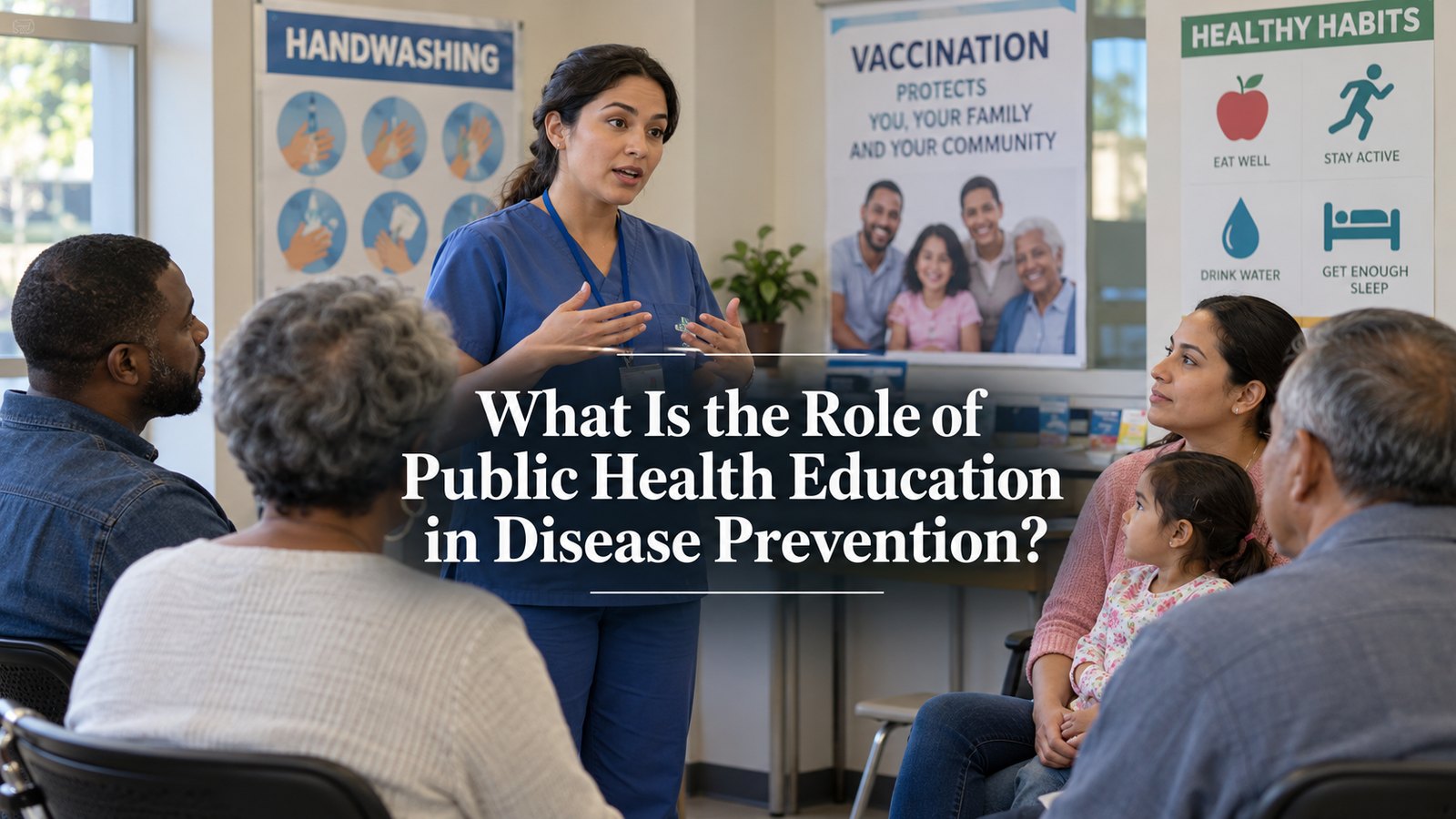
Public health education plays an important role in protecting people from diseases and improving the overall health of communities. Many health problems can be prevented when people understand their causes, recognize early warning signs, and follow healthy practices in everyday life. Education helps individuals make informed decisions about their health and encourages communities to create safer living environments.
Diseases can affect anyone, regardless of age, income, or background. Some diseases spread through infections, while others develop because of lifestyle habits, environmental conditions, or genetic factors. Public health education provides useful information about these risks and explains how people can reduce their chances of becoming ill.
The role of public health education in disease prevention goes beyond sharing medical information. It helps people develop healthy behaviors, improves awareness about health services, and supports long term community well being.
Understanding how public health education works can help individuals appreciate why health awareness is necessary for building healthier societies.
What Is Public Health Education?
Public health education is the process of providing people with knowledge and practical skills that help them protect and improve their health.
It focuses on teaching individuals and communities about disease prevention, personal hygiene, nutrition, physical activity, vaccination, environmental safety, and access to healthcare services.
Unlike medical treatment, which usually focuses on managing an existing illness, public health education often aims to prevent health problems before they occur.
Health education can take place in schools, hospitals, community centers, workplaces, and through digital platforms.
For example, a school may teach students the importance of washing their hands before eating. A hospital may provide information about controlling blood pressure. Community health workers may explain how mosquitoes spread certain diseases and how families can reduce mosquito breeding areas.
These educational activities may appear simple, but they can make an important difference in protecting public health.
Why Is Public Health Education Important for Disease Prevention?
Disease prevention becomes more effective when people understand the reasons behind recommended health practices.
Without proper knowledge, individuals may unknowingly follow habits that increase their risk of illness. They may ignore early symptoms, misunderstand how infections spread, or delay seeking medical attention.
Public health education helps address these problems by providing reliable and understandable information.
For example, someone who understands how contaminated drinking water spreads certain infections may become more careful about water safety.
Similarly, people who learn about the health risks associated with tobacco use may be more motivated to avoid smoking or seek support to quit.
Education also encourages people to take responsibility for their health while recognizing that safe housing, clean water, affordable healthcare, and other community conditions influence health outcomes.
When people receive accurate information and have the resources to act on it, preventing diseases becomes easier.
How Public Health Education Helps Prevent Infectious Diseases
Infectious diseases are caused by harmful microorganisms such as bacteria, viruses, fungi, and parasites.
Some infectious diseases spread from one person to another, while others are transmitted through contaminated food, unsafe water, insects, or environmental exposure.
Public health education helps people understand these different methods of transmission.
For example, respiratory infections can spread when infectious particles are released into the air through breathing, coughing, or sneezing.
Health education can explain the importance of good ventilation, appropriate respiratory precautions, and staying home when sick when possible.
It also encourages regular handwashing with soap and water, particularly before preparing food and after using the toilet.
People can learn how proper food handling and safe drinking water reduce the risk of gastrointestinal infections.
By understanding how infections spread, communities can take practical steps to reduce exposure and protect vulnerable individuals.
Promoting Personal Hygiene Through Health Education
Personal hygiene is one of the most familiar subjects taught in public health education.
Good hygiene practices help reduce contact with disease causing microorganisms and support everyday health.
Educational programs commonly encourage people to wash their hands, maintain oral hygiene, use clean clothing, and keep their surroundings sanitary.
Handwashing is particularly important because hands frequently touch surfaces, food, and the face.
When harmful microorganisms are present on the hands, they may enter the body through the mouth, nose, or eyes.
Washing hands correctly with soap and clean water helps remove many of these microorganisms.
Public health education also explains why toilets, kitchens, and food preparation areas should be kept clean.
These habits are especially important in homes, schools, restaurants, and other places where many people share facilities.
The Role of Public Health Education in Vaccination Awareness
Vaccination is an important tool for preventing several infectious diseases.
However, people may have questions about vaccine safety, effectiveness, recommended schedules, and possible side effects.
Public health education helps individuals understand how vaccines work and why they are recommended.
Vaccines train the immune system to recognize specific disease causing organisms or their components. This prepares the body to respond more effectively if exposure occurs later.
Educational campaigns can explain how vaccination reduces the risk of certain infections, serious complications, hospitalization, and death.
They also help parents understand the importance of following recommended childhood vaccination schedules.
Clear communication is particularly useful when false information creates confusion about vaccines.
Healthcare professionals and public health organizations can build trust by providing accurate information and responding respectfully to questions.
Greater vaccination awareness can encourage appropriate vaccine uptake and help protect communities.
Preventing Chronic Diseases Through Healthy Lifestyle Education
Public health education is not limited to infectious diseases.
It also plays an important role in preventing and managing chronic health conditions such as type 2 diabetes, cardiovascular disease, and certain cancers.
Many chronic diseases develop through a combination of genetic, environmental, and lifestyle factors.
Although not every case can be prevented, healthier habits can reduce the risk of several conditions.
Health education encourages people to choose balanced meals, remain physically active, avoid tobacco, and limit alcohol consumption.
For example, learning about dietary fiber, vegetables, fruits, and whole grains can help individuals make healthier food choices.
Physical activity education explains how regular movement supports heart health, muscle strength, and blood sugar regulation.
People may also learn about the importance of adequate sleep and maintaining a healthy body weight.
These lessons can encourage gradual lifestyle improvements that become part of everyday routines.
Improving Nutrition Awareness in Communities
Nutrition is closely connected to disease prevention because the human body requires essential nutrients to function properly.
Poor dietary habits can contribute to nutritional deficiencies and increase the risk of certain chronic diseases.
Public health education teaches people how to prepare balanced meals using available foods.
It explains the importance of proteins, carbohydrates, healthy fats, vitamins, minerals, and water.
Community nutrition programs may demonstrate how vegetables, fruits, pulses, whole grains, dairy products, and other nutritious foods can be included in daily meals.
Education can also help families understand food labels and make informed decisions about products containing large amounts of added sugar, sodium, or saturated fat.
For children, nutrition education supports healthy growth and development.
For adults, it can help establish eating habits that support long term health.
Practical advice that considers local food availability, cultural traditions, and family budgets is often more useful than complicated dietary rules.
Encouraging Early Detection and Health Screening
Another important role of public health education in disease prevention is encouraging early detection.
Some health conditions develop gradually and may not cause noticeable symptoms during their early stages.
High blood pressure, for example, can remain undetected for years without regular measurement.
Health education helps people understand why appropriate medical checkups and recommended screening tests matter.
It may encourage individuals to monitor their blood pressure, discuss diabetes risk with healthcare professionals, or participate in age appropriate cancer screening programs.
Early detection can improve treatment opportunities and reduce the risk of complications for certain conditions.
However, screening recommendations depend on factors such as age, medical history, symptoms, and individual risk.
Public health education helps people understand these differences and encourages them to seek professional guidance rather than choosing unnecessary tests.
Supporting Maternal and Child Health
Mothers and children benefit greatly from effective public health education.
Pregnancy, infancy, and early childhood are important stages when appropriate healthcare and preventive practices can influence long term health.
Educational programs may explain the value of prenatal care, balanced nutrition during pregnancy, recommended vaccinations, and safe childbirth practices.
Parents can also learn about breastfeeding, age appropriate complementary feeding, childhood hygiene, and developmental milestones.
Health workers may provide information about recognizing warning signs such as dehydration, breathing difficulties, or persistent fever.
These lessons help caregivers understand when medical attention is necessary.
School health education also teaches children healthy habits that may continue into adulthood.
When health knowledge becomes part of family life, its benefits can extend across generations.
The Importance of Schools in Public Health Education
Schools provide valuable opportunities to teach disease prevention from an early age.
Children spend a significant part of their day in educational environments, making schools suitable places for introducing healthy habits.
Teachers can explain why students should wash their hands, drink safe water, eat nutritious meals, and remain physically active.
Lessons about microorganisms, the human body, and environmental cleanliness can make health information easier to understand.
Schools may also organize awareness activities related to dental health, mosquito prevention, and respiratory infections.
When students understand health concepts, they may share useful information with their families.
In this way, schools can support healthier behavior beyond the classroom.
Effective school health education should provide age appropriate information and practical examples rather than relying only on memorization.
Public Health Education and Environmental Disease Prevention
Environmental conditions have a major influence on human health.
Unsafe drinking water, inadequate sanitation, polluted air, and poor waste management can contribute to various illnesses.
Public health education explains how environmental problems affect disease risk and what communities can do to reduce exposure.
For example, people can learn how standing water may provide breeding sites for mosquitoes that transmit dengue and other diseases.
Awareness campaigns can encourage households to remove unnecessary containers holding stagnant water and participate in local mosquito control activities.
Education also promotes safe waste disposal and improved sanitation practices.
Communities may be encouraged to report environmental hazards and support improvements in drinking water systems.
Although education alone cannot solve major environmental problems, it helps people understand why collective action and public services are necessary.
How Community Awareness Programs Improve Public Health
Community awareness programs bring health information directly to people.
These programs may include workshops, public meetings, health camps, educational posters, radio messages, and community discussions.
Local healthcare workers often play an important role because they understand the language, traditions, and health concerns of the people they serve.
For example, a community awareness program about dengue may explain how mosquitoes breed, what symptoms require medical attention, and how households can reduce mosquito exposure.
A diabetes awareness session may discuss healthy eating, physical activity, risk factors, and the importance of medical assessment.
Programs are often more effective when they involve community members and address practical challenges.
Providing information in simple language and offering opportunities to ask questions can make health messages more understandable and trustworthy.
The Role of Digital Media in Public Health Education
Digital technology has changed how health information reaches the public.
Websites, mobile applications, educational videos, and social media platforms can share health messages with large audiences.
People can learn about disease prevention, healthy habits, and recommended healthcare services without attending formal classes.
Digital platforms are especially useful for explaining health topics through visual demonstrations and accessible educational content.
For example, a short video can demonstrate proper handwashing techniques or explain how to store food safely.
However, inaccurate medical information can also spread quickly online.
Public health education should therefore teach people how to recognize reliable health sources and question unsupported claims.
Government health departments, established medical institutions, and qualified healthcare professionals are useful sources of evidence based information.
Digital literacy helps individuals make better decisions and reduces confusion caused by misleading health advice.
Reducing Health Inequalities Through Education
Not everyone has equal access to health information or healthcare services.
People living in remote communities may experience difficulties accessing medical facilities, educational resources, or preventive services.
Language barriers, limited literacy, financial challenges, and social conditions may also affect health understanding.
Public health education can help reduce some of these gaps by making information accessible to different populations.
Programs may use local languages, visual materials, community volunteers, and practical demonstrations.
However, information alone cannot overcome barriers such as the cost of treatment, lack of transportation, or shortages of healthcare professionals.
For this reason, health education works best when combined with affordable services, appropriate facilities, and supportive public policies.
A fair approach to disease prevention considers both individual knowledge and the circumstances in which people live.
Challenges in Public Health Education
Despite its importance, public health education faces several challenges.
One major problem is the spread of misinformation. False health claims can create confusion and discourage people from following effective preventive measures.
Another challenge is communicating scientific information in language that ordinary people can understand.
Complicated medical terminology may make educational materials difficult to follow.
Cultural beliefs, limited resources, and distrust of health institutions can also affect participation in educational programs.
Some people understand healthy practices but cannot follow them because of financial or environmental limitations.
For example, teaching handwashing is less effective when communities lack reliable access to clean water and soap.
Successful programs must therefore combine clear communication with practical support.
Listening to community concerns and adapting messages to local needs can improve the usefulness of public health education.
How Individuals Can Apply Public Health Education in Daily Life
The value of public health education becomes clear when knowledge leads to practical action.
Individuals can use reliable health information to make informed decisions about personal hygiene, nutrition, physical activity, and preventive healthcare.
Families can practice safe food preparation, maintain clean living spaces, and follow vaccination recommendations.
People can also learn to recognize symptoms that require medical advice and avoid relying on unverified treatments.
Sharing accurate information with family members and friends may encourage healthier behavior throughout the community.
Small changes, when practiced consistently and supported by suitable resources, can contribute to disease prevention.
The goal is not to eliminate every possible health risk but to reduce preventable illness and improve quality of life.
Conclusion
Public health education plays a fundamental role in disease prevention by helping people understand health risks and encouraging practical preventive behaviors.
It supports personal hygiene, vaccination awareness, healthy nutrition, physical activity, environmental safety, and early detection of certain diseases.
Schools, healthcare institutions, community organizations, and digital platforms all contribute to spreading useful health knowledge.
Effective public health education also recognizes that health is influenced by social conditions, economic opportunities, and access to essential services.
When accurate information is combined with supportive environments and reliable healthcare, individuals and communities are better equipped to prevent illness.
The role of public health education in disease prevention is ultimately to turn health knowledge into meaningful action. By encouraging informed choices and collective responsibility, it helps create healthier families, safer communities, and a stronger foundation for long term public health.